Southern Vietnam Travel Guide: Ho Chi Minh City, Mekong Delta & Phu Quoc
Southern Vietnam offers a completely different travel experience from the mountains of the north and the imperial heritage of Central Vietnam. The region combines the energy of Ho Chi Minh City, the waterways and agricultural landscapes of the Mekong Delta, and the beaches, forests and island culture of Phu Quoc.
For many first-time visitors, these three destinations create one of the most balanced southern Vietnam itineraries. You can begin with skyscrapers, French-colonial architecture, markets and street food in Ho Chi Minh City, continue into the river world of the Mekong Delta, and finish on Phu Quoc with white-sand beaches, seafood, pepper farms and tropical sunsets.
Southern Vietnam’s official regional guide describes the area as a combination of vibrant urban life, mellow countryside and island escapes. It identifies Ho Chi Minh City, Can Tho, Chau Doc, Phu Quoc, Binh Thuan and Con Dao among the region’s key destinations.
This Southern Vietnam travel guide focuses on the three destinations most useful for a first trip: Ho Chi Minh City, the Mekong Delta and Phu Quoc, while also explaining how to add places such as Cu Chi, Ben Tre, Can Tho and Chau Doc.
Southern Vietnam at a Glance
| Destination | Best For | Recommended Stay |
|---|---|---|
| Ho Chi Minh City | Food, history, nightlife, shopping | 2–3 days |
| Mekong Delta | Rivers, markets, fruit orchards, villages | 1–3 days |
| Ben Tre | Coconut waterways, countryside | 1–2 days |
| Can Tho | Floating markets, river life, food | 1–2 days |
| Chau Doc | Temples, border culture, river scenery | 1–2 days |
| Phu Quoc | Beaches, islands, seafood, nature | 3–4 days |
| Cu Chi | War history | Half day |
| Con Dao | Quiet beaches, nature, history | 2–3 days |
| Mui Ne | Sand dunes, beaches, kitesurfing | 2–3 days |
Why Visit Southern Vietnam?
Southern Vietnam has one of the broadest contrasts in the country.
In Ho Chi Minh City, traffic, cafés, skyscrapers, street vendors and historic buildings create an intense urban environment.
A few hours away, the Mekong Delta is built around waterways. Boats replace many forms of urban transportation, fruit orchards surround villages, and floating markets still shape the rhythm of early mornings.
Then there is Phu Quoc, where the pace changes completely. The island offers long beaches, turquoise water, tropical forests, seafood restaurants, fishing communities and resort areas.
Official tourism information describes the south as a region where urban energy, farmland and island landscapes sit within the same broad travel area.
1. Ho Chi Minh City – The Gateway to Southern Vietnam
Ho Chi Minh City is the natural starting point for most Southern Vietnam itineraries.
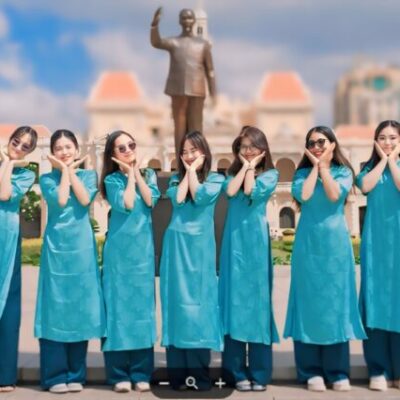
Formerly known as Saigon, the city is Vietnam’s economic center and the main transportation hub of the south. Its skyline combines modern skyscrapers with French-colonial buildings, Chinese temples, traditional markets and dense residential neighborhoods.
The city can feel overwhelming at first, but that energy is part of its character.
You can spend the morning visiting historical landmarks, have lunch at a local noodle shop, explore Cholon in the afternoon and finish the evening on a rooftop or street-food tour.
Ho Chi Minh City Travel Style
Choose Ho Chi Minh City if you enjoy:
Street food
History
Shopping
Coffee
Nightlife
Architecture
Markets
Motorbike experiences
It is also the easiest gateway for reaching the Mekong Delta.
2. Reunification Palace
The Reunification Palace, also known as the Independence Palace, is one of the city’s most important historical sites.
The building was the residence and workplace of the President of South Vietnam and became associated with the events of April 30, 1975.
Inside, you can see conference rooms, offices, reception rooms and the former command center.
The basement war rooms are particularly interesting for travelers who want to understand how the building functioned during the final years of the conflict. Official tourism information lists the palace among the city’s principal historic attractions.
3. War Remnants Museum
The War Remnants Museum is one of the most visited historical museums in Ho Chi Minh City.
Its exhibitions cover the Vietnam War and its consequences through photographs, documents, military equipment and personal stories.
The museum can be emotionally difficult because some displays are graphic.
Allow at least 1–2 hours rather than rushing through it.
For travelers interested in modern Vietnamese history, this is one of the most important places in the city.
4. Notre Dame Cathedral and Central Post Office
The Saigon Central Post Office is one of the city’s best-preserved colonial-era architectural landmarks.
It sits near the cathedral and can easily be combined with Dong Khoi Street, Nguyen Hue Walking Street and the Opera House.
The area is ideal for travelers who want to explore central Ho Chi Minh City on foot.
The city’s official guide recommends walking around Dong Khoi to see the cathedral, Central Post Office and Opera House in one concentrated sightseeing area.
5. Ben Thanh Market
Ben Thanh Market is one of Ho Chi Minh City’s best-known markets.
The market sells:
Fresh food
Dried fruit
Coffee
Clothing
Souvenirs
Spices
Prepared dishes
It is more tourist-oriented than some local markets, but it remains convenient for first-time visitors.
For a more everyday market experience, venture farther into the neighborhoods around the city.
6. Cholon – Ho Chi Minh City’s Chinatown
Cholon provides a very different side of Ho Chi Minh City.
The area is associated with the city’s Chinese-Vietnamese community and contains historic temples, markets, pharmacies, restaurants and traditional shops.
Visit Binh Tay Market and Thien Hau Pagoda before exploring the smaller streets around the district.
The official city guide specifically recommends Cholon, Binh Tay Market and Thien Hau Pagoda for travelers interested in local history and culture.
7. Nguyen Hue Walking Street
Nguyen Hue Walking Street is one of the best places to see modern Ho Chi Minh City after sunset.
The boulevard connects the city center with the Saigon River and becomes especially lively in the evening.
Families, young people, street performers and photographers all use the space.
The surrounding high-rise buildings provide a dramatic contrast with older parts of the city.
8. Saigon River
The Saigon River provides another perspective on Ho Chi Minh City.
You can walk along the river, enjoy a rooftop view or take a short evening cruise.
For travelers who want an urban experience without visiting another monument, a sunset cruise can be a relaxing addition.
9. Ho Chi Minh City Street Food
Food should be a major part of a Ho Chi Minh City itinerary.
Try:
Banh mi
Com tam
Banh xeo
Hu tieu
Bun thit nuong
Broken-rice dishes
Southern Vietnamese desserts
Official tourism information specifically highlights banh mi, southern-style banh xeo and com tam among the city’s key food experiences.
10. Explore Ho Chi Minh City by Motorbike
A motorbike food tour can be one of the easiest ways to understand the size and rhythm of the city.
Instead of staying in District 1, a local driver can take you through residential neighborhoods, street-food areas, markets and districts that most visitors would not reach on foot.
Official city guidance specifically recommends motorbike tours as a way to experience the city at street level.
11. Ho Chi Minh City at Night
The city becomes particularly attractive after dark.
You can choose:
Street-food tour
Rooftop bar
Nguyen Hue walk
Saigon River cruise
Night market
Motorbike tour
For first-time visitors, a combination of dinner and evening sightseeing usually works better than trying to visit multiple museums at night.
12. Cu Chi Tunnels – Best Historical Excursion From Ho Chi Minh City
The Cu Chi Tunnels are one of the most popular excursions from Ho Chi Minh City.
The tunnel network was used by Viet Cong forces during the Vietnam War and became an important base of operations.
Visitors can explore sections of the tunnel system and see underground rooms, traps and displays explaining how people lived and fought in the area.
The experience is physically more demanding than many city museums, especially in the narrower tunnel sections.
A half-day is usually enough.
13. The Mekong Delta – Southern Vietnam’s River World
The Mekong Delta begins where the Mekong River spreads into a huge network of waterways and agricultural areas before reaching the sea.
The landscape is shaped by:
Rivers
Canals
Rice fields
Fruit orchards
Fishing
Floating markets
Stilt houses
Village roads
The result is one of the most distinctive travel environments in Vietnam.
Official tourism information describes the Delta as a water-based world of rivers, forests, boats, markets and fertile farmland, with Can Tho and Chau Doc among its strongest bases.
14. Ben Tre – Coconut Country
Ben Tre is one of the easiest Mekong Delta destinations to visit from Ho Chi Minh City.
The province is known for coconut groves, narrow canals, fruit gardens and small waterways.
A typical visit might include a boat ride, cycling, a family-run workshop and lunch in a rural setting.
Ben Tre works especially well for travelers who have only one extra day after Ho Chi Minh City.
15. My Tho
My Tho is one of the most accessible points in the Mekong Delta from Ho Chi Minh City.
Many day tours use My Tho as their entry point to the Delta because the city is relatively close to the metropolis.
A typical excursion combines:
Boat trip
Small canals
Fruit gardens
Local food
Village visits
For a more immersive experience, however, continuing farther toward Ben Tre or Can Tho is generally more rewarding.
16. Can Tho – Best Base for the Mekong Delta
Can Tho is the largest city in the Mekong Delta and one of the best bases for exploring the region.
It combines urban amenities with waterways, orchards, traditional homes and floating markets.
Official tourism information recommends Can Tho for travelers who want to see floating markets, river life, fruit gardens and local food.
For a first-time Mekong Delta experience, staying one night in Can Tho is significantly better than returning immediately to Ho Chi Minh City.
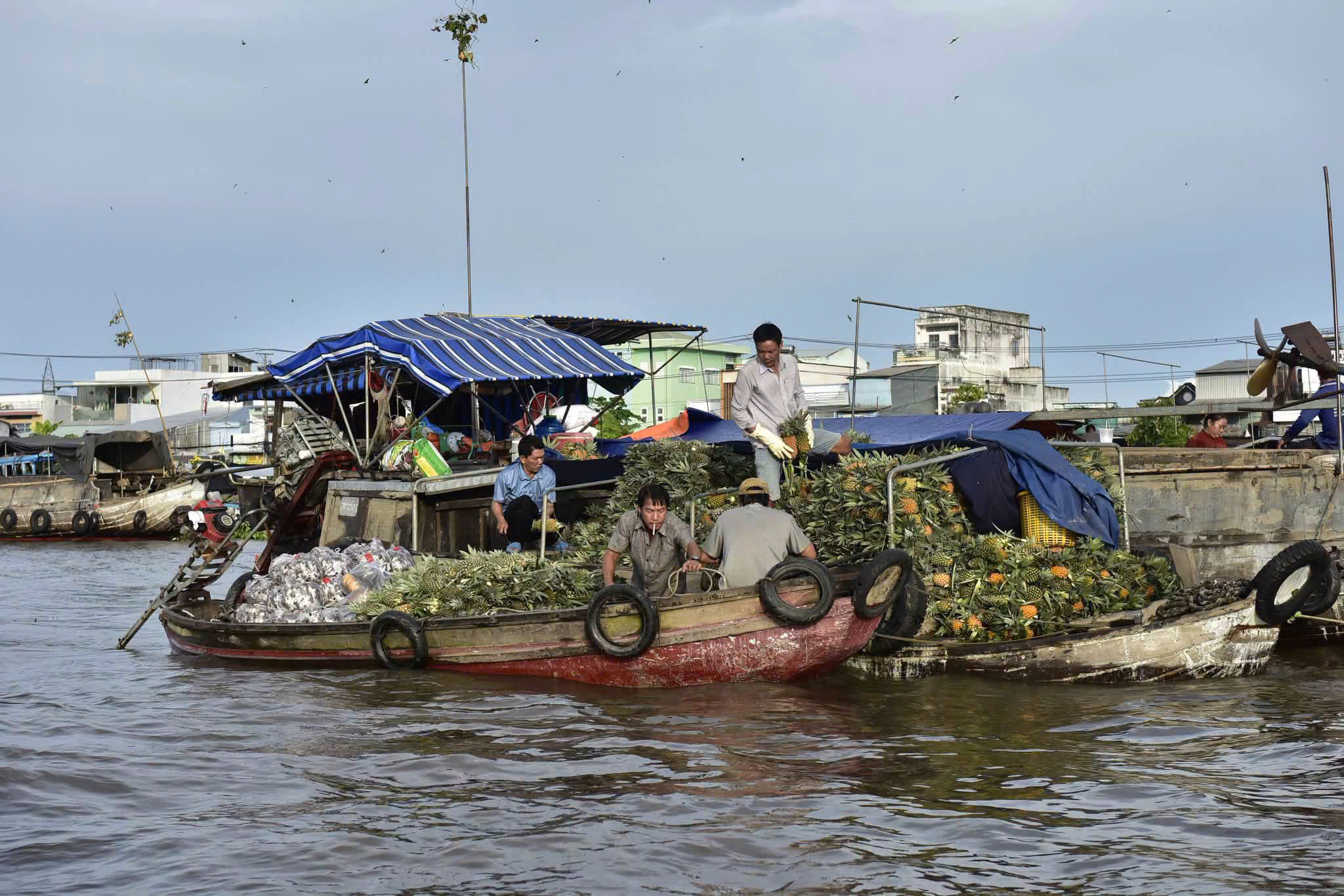
17. Cai Rang Floating Market
The Cai Rang Floating Market is one of the Mekong Delta’s signature experiences.
The market begins very early in the morning, when boats carrying fruit, vegetables, noodles and coffee gather on the river.
Official tourism information recommends getting on the water at around 5:00–6:00 AM to see the market at its busiest.
Do not expect a market that looks exactly like a floating shopping mall.
Its value lies in observing how river trade actually works.
18. Take a Morning Boat Ride in Can Tho
The best way to see Can Tho is from the water.
Wake before sunrise, board a small boat and travel through the waterways toward Cai Rang.
After the market, continue through smaller canals and watch people prepare breakfast, transport produce and begin their working day.
The early start is worth it.
19. Eat Breakfast on the Mekong
One of the most enjoyable Delta experiences is having breakfast on the water.
Try:
Hu tieu
Banh mi
Vietnamese coffee
Fresh fruit
Official tourism information specifically highlights the experience of eating noodle dishes from boats during the floating-market morning.
20. Visit Mekong Fruit Orchards
The Delta is one of Vietnam’s major agricultural regions.
Depending on the season, you may encounter:
Durian
Rambutan
Mangosteen
Pomelo
Mango
Longan
Jackfruit
Can Tho’s official tourism information notes that June–August is particularly attractive for travelers interested in fruit gardens.
21. Visit Binh Thuy Ancient House
The Binh Thuy Ancient House near Can Tho offers a look at how a wealthy Southern Vietnamese family lived.
The house blends Asian and French architectural elements.
It is a good stop for travelers who want something more cultural than another boat ride.
Official local destination information dates the house to 1870 and identifies it as an important example of the region’s blended architecture.
22. Explore Mekong Delta Villages by Bicycle
Cycling is one of the best ways to move beyond the main river routes.
Ride along small roads surrounded by:
Fruit trees
Canals
Rice fields
Houses
Vegetable gardens
Local workshops
The roads are generally slower and quieter than urban Ho Chi Minh City, making them suitable for travelers who want a more relaxed experience.
23. Mekong Delta Food
The Mekong has its own culinary identity.
Try:
Hu tieu
Elephant-ear fish
Caramelized fish in clay pot
Grilled river fish
Fresh tropical fruit
Coconut-based sweets
Official food guidance notes that the Delta’s fertile land supports large quantities of rice, fruit and vegetables, while its waterways supply shrimp and river fish.
24. Chau Doc
Chau Doc is a strong choice for travelers who want to explore deeper into the Mekong Delta.
The city sits near the Cambodian border and provides access to waterways, temples, floating communities and the famous Tra Su Cajuput Forest.
It is better suited to a 2–3 day Delta itinerary than a quick day trip.
25. Tra Su Cajuput Forest
Tra Su Cajuput Forest provides a very different environment from the open river landscapes around Can Tho.
Small boats travel through narrow waterways surrounded by cajuput trees and aquatic vegetation.
It is particularly attractive for photographers and nature lovers.
26. Phu Quoc – Vietnam’s Tropical Island Escape
After the intensity of Ho Chi Minh City and the slower waterways of the Mekong Delta, Phu Quoc offers a dramatic change.
The island is famous for:
White-sand beaches
Turquoise water
Seafood
Fish sauce
Black pepper
Tropical forests
Sunsets
Resorts
Official island information describes Phu Quoc as a destination combining beaches, forests, fishing villages, agriculture and cultural heritage. More than half of the island has been protected within a UNESCO Biosphere Reserve since 2006.
27. Long Beach
Long Beach is one of the easiest areas for first-time visitors.
The coastline stretches for about 20 kilometers, making it particularly well suited to sunset walks and beachfront accommodation.
The area includes everything from simple guesthouses to large luxury resorts.
28. Sao Beach
Sao Beach is one of Phu Quoc’s best-known beaches.
White sand and turquoise water make it particularly attractive during suitable weather.
It is more developed than many remote beaches, but still worth visiting for a few hours.
29. Ganh Dau
Ganh Dau lies in the northwestern part of the island.
The area is less urbanized than the central resort zones and provides a more relaxed coastal atmosphere.
Official island information highlights Ganh Dau as one of the beaches where visitors can still find more secluded stretches of coastline.
30. Bai Thom
Bai Thom lies farther north and offers a quieter, more wooded coastline.
It works well for travelers who want to escape the busier southern resort districts.
31. Phu Quoc National Park
The northern part of the island contains Phu Quoc National Park, where visitors can explore forest, trails and natural areas.
Official tourism information identifies several northern locations—such as Bai Thom, Cua Duong, Ham Ninh and Ganh Dau—as places for hiking, bird-watching and nature activities.
For nature lovers, at least one forest excursion is worth adding to a beach-focused itinerary.
32. Explore the An Thoi Archipelago
The An Thoi Archipelago lies off southern Phu Quoc and is one of the island’s main areas for snorkeling, diving and boat excursions.
A full-day island tour can combine:
Snorkeling
Swimming
Beach time
Seafood lunch
Fishing villages
Sunset
Official island guidance highlights the archipelago’s beaches and underwater reefs as major attractions.
33. Visit Ham Ninh Fishing Village
Ham Ninh is associated with traditional fishing and seafood.
The village is a good place to combine local food with a quieter look at island life.
Try fresh crab, shellfish or local fish depending on the day’s catch.
34. Visit a Fish Sauce Factory
Phu Quoc is famous for its fish sauce, an important product with a long local tradition.
A factory or production visit can explain how the sauce is fermented and why Phu Quoc fish sauce has such a strong reputation.
The island’s official tourism information specifically recommends learning about fish sauce production as part of understanding its culture.
35. Visit Phu Quoc Pepper Farms
The island is also known for black pepper.
Pepper farms are an easy cultural addition to a northern or central-island itinerary.
For food travelers, combining a pepper farm with a fish-sauce visit provides a more complete understanding of the island’s agricultural economy.
36. Visit Phu Quoc Prisons and Historical Sites
Travelers interested in history can visit Cay Dua Prison, associated with the island’s wartime history.
The site provides a much darker perspective on Phu Quoc than the resort beaches.
Official island information includes Cay Dua Prison among the cultural and historical sites worth visiting.
37. Phu Quoc Nightlife
Phu Quoc’s nightlife is generally concentrated around restaurants, night markets, beach bars and sunset venues rather than large urban nightlife districts.
A typical evening might include:
Seafood dinner
Night market
Sunset bar
Live music
Beach walk
38. Phu Quoc Night Market
The island’s main night-market area is a practical place to try seafood, snacks and souvenirs.
It is more commercial than the floating markets of the Mekong Delta, but provides an easy evening activity after a beach day.
39. Watch the Sunset on Phu Quoc
Phu Quoc’s western coastline is particularly well known for sunset.
Long Beach is one of the easiest locations because of its length and concentration of hotels and restaurants.
Sunset cruises are another option for couples and private groups.
40. Phu Quoc for Families
Phu Quoc is well suited to families because you can combine:
Beach
Boat trips
Snorkeling
Nature
Seafood
Markets
Resorts
Families should choose accommodation based on beach access and transportation rather than simply booking the largest resort.
41. Phu Quoc for Couples
For couples, Phu Quoc works particularly well as the final part of a Southern Vietnam itinerary.
Spend the day exploring beaches or islands, then finish with a sunset cruise or dinner beside the sea.
42. Southern Vietnam Food
Southern Vietnamese cuisine is generally associated with bold flavors, herbs, freshwater fish, tropical fruit and a slightly sweeter profile than some northern dishes.
In Ho Chi Minh City, try com tam, banh xeo and hu tieu.
In the Mekong Delta, look for river fish, fresh fruit, coconut-based dishes and regional noodles.
On Phu Quoc, focus on seafood, fish sauce, black pepper and grilled fish.
43. When Is the Best Time to Visit Southern Vietnam?
Southern Vietnam is warm throughout the year, but rainfall changes by season.
For Ho Chi Minh City and the Mekong Delta, official climate guidance identifies December–April as the clearer, sunnier period, while May–November is hotter and wetter with regular afternoon rain.
For Phu Quoc, official guidance identifies October–June as the generally drier period and July–September as the stormier, wetter period.
This makes December through April one of the easiest periods for a combined Ho Chi Minh City + Mekong Delta + Phu Quoc trip.
44. Southern Vietnam in January
January is one of the strongest months for this region.
Ho Chi Minh City is warm and relatively dry.
The Mekong Delta offers comfortable river travel.
Phu Quoc is in its dry-season window.
For a first trip, January is an excellent choice.
45. Southern Vietnam in February
February remains very favorable, although holiday periods around Tet can affect opening hours, transportation and accommodation.
The weather is generally attractive across the three main destinations.
46. Southern Vietnam in March
March remains hot but relatively dry.
This is an excellent month for combining city exploration with a Mekong Delta trip and island time.
47. Southern Vietnam in April
April can become very hot in Ho Chi Minh City and the Mekong Delta.
Phu Quoc remains attractive, although temperatures rise.
Plan outdoor sightseeing in the morning and late afternoon.
48. Southern Vietnam in May
The rainy season begins increasing across Ho Chi Minh City and the Mekong Delta.
Short afternoon showers are common.
The showers do not necessarily stop travel, but they make flexible scheduling useful.
49. Southern Vietnam in June
June is typically hotter and wetter in the south.
The Mekong Delta can become lush and fruit gardens become particularly interesting.
On Phu Quoc, weather becomes increasingly variable.
50. Southern Vietnam in July and August
These months are less predictable for a beach-focused Phu Quoc trip because the island enters its wetter period.
Ho Chi Minh City and the Mekong Delta can still be enjoyable between rain showers.
Travelers who prioritize beaches should consider visiting Phu Quoc earlier or later in the year.
51. Southern Vietnam in September
September remains part of the wetter period.
Ho Chi Minh City can experience heavy afternoon showers.
The Mekong Delta remains green and productive, but boat trips should remain flexible.
Phu Quoc can experience unsettled sea conditions.
52. Southern Vietnam in October
October marks an important transition for Phu Quoc.
Conditions generally begin improving, making the island increasingly attractive for beach travel. Official climate guidance places the start of Phu Quoc’s drier season around October.
53. Southern Vietnam in November
November is one of the better months for starting to combine all three destinations.
Rain decreases, and Phu Quoc’s beach conditions generally improve.
54. Southern Vietnam in December
December is one of the best months for the classic Southern Vietnam route.
Ho Chi Minh City and the Mekong Delta are generally drier, while Phu Quoc enters a favorable beach period.
55. How Many Days Do You Need in Southern Vietnam?
For a quick overview, allow 6–7 days.
A comfortable itinerary is:
2–3 days Ho Chi Minh City
1–2 days Mekong Delta
3 days Phu Quoc
For a deeper trip, allow 10–14 days.
This gives you time for Can Tho, Ben Tre, Chau Doc or additional island and countryside experiences.
56. Southern Vietnam 7-Day Itinerary
Day 1 – Ho Chi Minh City
Arrive and explore the central districts.
Visit Nguyen Hue, the Central Post Office area and Ben Thanh Market.
Day 2 – Ho Chi Minh City
Visit the Reunification Palace, War Remnants Museum and Cholon.
Finish with a street-food or motorbike experience.
Day 3 – Ho Chi Minh City → Mekong Delta
Travel toward Ben Tre or Can Tho.
Take a boat through smaller waterways, visit a fruit garden and have a local lunch.
Stay overnight in the Delta.
Day 4 – Mekong Delta → Ho Chi Minh City
Wake early for a market or countryside experience.
Return to Ho Chi Minh City and fly to Phu Quoc.
Day 5 – Phu Quoc
Beach day.
Visit Long Beach or Sao Beach.
Watch sunset.
Day 6 – Phu Quoc
Take an An Thoi island or snorkeling excursion.
Day 7 – Phu Quoc
Relax, explore the local area and depart.
This route is fast but gives a strong overview.
57. Southern Vietnam 10-Day Itinerary
Days 1–3: Ho Chi Minh City.
Days 4–5: Ben Tre + Can Tho.
Day 6: Can Tho → Ho Chi Minh City → Phu Quoc.
Days 7–9: Phu Quoc.
Day 10: Phu Quoc departure.
This is more comfortable than the seven-day version.
58. Southern Vietnam 14-Day Itinerary
A deeper route could be:
Days 1–3: Ho Chi Minh City.
Days 4–5: Ben Tre.
Days 6–7: Can Tho.
Days 8–9: Chau Doc / Tra Su.
Days 10–13: Phu Quoc.
Day 14: Departure.
This is ideal for travelers who want culture, food, rivers and beaches rather than simply checking off major attractions.
59. Best Southern Vietnam Itinerary for Food Lovers
For food-focused travelers:
Ho Chi Minh City: Com tam, banh xeo, banh mi, hu tieu.
Mekong Delta: River fish, tropical fruit, local noodles, coconut dishes.
Phu Quoc: Seafood, fish sauce, black pepper and grilled fish.
Food should be treated as part of the itinerary rather than something added at the end of each day.
60. Best Southern Vietnam Itinerary for Couples
For couples:
Day 1–2: Ho Chi Minh City.
Day 3: Mekong Delta.
Day 4: Phu Quoc.
Days 5–7: Beach, islands and sunset experiences.
A private transfer and private boat can make the route much more relaxed.
61. Best Southern Vietnam Itinerary for Families
Families can choose:
Ho Chi Minh City → Mekong Delta → Phu Quoc
The city provides museums and urban experiences.
The Delta provides boats and fruit gardens.
Phu Quoc provides beaches and swimming.
This combination avoids having children spend the entire holiday inside museums or on long road journeys.
62. Best Southern Vietnam Itinerary for First-Time Visitors
The classic first-time route is:
Ho Chi Minh City
Can Tho or Ben Tre
Phu Quoc
This gives you the three core southern experiences without making the trip too complicated.
63. Ho Chi Minh City vs Hanoi
Ho Chi Minh City is generally more energetic and commercially driven.
Hanoi has a stronger concentration of old neighborhoods, lakes and historical architecture.
Choose Ho Chi Minh City for:
Nightlife
Street food
Modern city life
Southern cuisine
Access to the Mekong Delta
64. Mekong Delta vs Northern Vietnam Mountains
These are completely different experiences.
Northern Vietnam offers:
Mountains
Rice terraces
Cooler climates
Highland villages
The Mekong offers:
Rivers
Canals
Fruit orchards
Boats
Tropical agriculture
Choose according to the landscapes you want.
65. Phu Quoc vs Central Vietnam Beaches
Choose Phu Quoc for:
Island atmosphere
Long beach stays
Resort holidays
Snorkeling
Sunsets
Choose Central Vietnam for:
Beach + cultural sightseeing
Hue
Hoi An
Da Nang
Road trips
Phu Quoc is particularly good as the final relaxing stage of a longer Vietnam itinerary.
66. Where to Stay in Ho Chi Minh City
For first-time visitors, District 1 is the easiest base.
You will be close to:
Ben Thanh Market
Nguyen Hue
Dong Khoi
Central Post Office
Restaurants
Nightlife
Travelers who want a more residential atmosphere can consider District 3.
For food and Chinese-Vietnamese culture, District 5 and Cholon are worth exploring.
67. Where to Stay in the Mekong Delta
For a first trip, Can Tho is the most convenient base.
Staying near the river or Ninh Kieu Wharf makes early morning boat departures easier.
For a quieter experience, choose a riverside homestay or garden property outside the city center.
Official Can Tho guidance notes accommodation options ranging from central hotels to riverfront resorts and homestays.
68. Where to Stay in Ben Tre
Ben Tre is better suited to travelers who prioritize rural atmosphere.
Choose:
Riverside lodge
Garden homestay
Small resort
Family-run accommodation
A central city hotel is convenient, but a property surrounded by waterways and gardens gives you a much stronger Delta experience.
69. Where to Stay in Phu Quoc
Choose your area carefully.
Long Beach
Best for:
Sunsets
Restaurants
Resorts
Convenience
Ong Lang
Best for:
Quieter beaches
Couples
Relaxation
Ganh Dau
Best for:
Nature
Less-developed coast
Quiet resorts
An Thoi
Best for:
Island tours
Cable-car access
Southern archipelago
The best location depends on whether you want to spend most of your time at the beach or on excursions.
70. How to Get Around Ho Chi Minh City
For short distances, use:
Ride-hailing
Taxi
Walking
For sightseeing:
Private car
Motorbike
Local guide
The city guide notes that taxis are widely available and ride-hailing apps such as Grab are practical when travelers have a local SIM or suitable connectivity.
71. How to Travel From Ho Chi Minh City to the Mekong Delta
The Delta is easy to reach by road.
For Ben Tre or My Tho, a private car or organized excursion is practical.
For Can Tho, the road journey is longer, making an overnight stay more attractive.
Official Can Tho information places the city about 165 kilometers from Ho Chi Minh City and notes private car, motorbike and express-bus options.
72. How to Travel From Ho Chi Minh City to Phu Quoc
Flying is generally the most practical option for visitors combining Ho Chi Minh City with Phu Quoc.
The flight saves significant travel time compared with traveling overland and then transferring to a ferry.
Travelers who specifically want a sea journey can also use ferry routes via the mainland, but schedules and weather conditions should be checked before booking.
73. Can You Travel From the Mekong Delta Directly to Phu Quoc?
Yes, and this can make the itinerary more efficient.
A common route is:
Can Tho → Rach Gia or Ha Tien → Phu Quoc
However, transportation schedules can vary, and the overland-plus-ferry journey takes much longer than flying from Ho Chi Minh City.
For travelers with limited time, flying is usually the simplest solution.
74. Southern Vietnam by Private Car
Private cars are particularly useful for:
Ho Chi Minh City → Ben Tre
Ho Chi Minh City → Can Tho
Mekong countryside
Phu Quoc airport transfers
They become most valuable when the route includes multiple stops.
75. Southern Vietnam by Motorbike
Motorbikes are practical in Ho Chi Minh City and on some Delta countryside routes for experienced riders.
However, traffic in Ho Chi Minh City is intense, and roads outside the cities can vary significantly in quality.
International travelers should make sure they have the legally required documentation and suitable insurance before riding.
76. Southern Vietnam by Boat
Boat travel is essential to the Mekong experience.
Use boats for:
Floating markets
Canals
Fishing villages
Island routes
Sunset cruises
The boat is not simply transportation in the Delta. It is part of how you understand the region.
77. Southern Vietnam for Photographers
For photography, prioritize:
Ho Chi Minh City: neon streets, markets, architecture.
Mekong Delta: boats, markets, fruit gardens, canals.
Phu Quoc: beaches, sunsets, fishing villages.
Early morning is particularly important in the Mekong Delta because the floating-market activity starts before sunrise.
78. Southern Vietnam for Adventure Travelers
Choose:
Cu Chi
Mekong cycling
Canal boat trips
Phu Quoc snorkeling
Jungle and forest walks
Island-hopping
For more intensive adventure, add Con Dao or explore deeper into the Mekong.
79. Southern Vietnam for Luxury Travelers
A luxury itinerary can combine:
5-star Ho Chi Minh City hotel
Private Mekong Delta boat
Boutique riverside lodge
Private transfer
Luxury Phu Quoc beach resort
Private island cruise
The contrast between urban luxury, riverside calm and tropical beach makes the south particularly suitable for high-end private travel.
80. Southern Vietnam for Slow Travel
Slow travelers should spend more time in the Mekong Delta.
Instead of a single day trip from Ho Chi Minh City, stay in Can Tho or Ben Tre for two nights.
Cycle through villages.
Take an early boat.
Eat with local families.
Visit fruit gardens.
Avoid scheduling every hour.
Then continue to Phu Quoc for several days of relaxed beach time.
81. What to Pack for Southern Vietnam
Bring:
Lightweight clothing
Comfortable shoes
Sun protection
Swimwear
Rain jacket
Mosquito protection
Power bank
Waterproof phone case
Small daypack
For the Mekong Delta, breathable clothing and sandals can be particularly useful.
82. What to Wear
Southern Vietnam is warm throughout much of the year.
Light clothing is usually appropriate, but bring something modest for temples and historical sites.
For boat trips, quick-drying clothes are useful.
For Ho Chi Minh City’s modern restaurants and nightlife, one smart-casual outfit is sufficient.
83. Southern Vietnam Travel Safety
Use standard precautions in crowded markets and busy city streets.
Keep phones and wallets secure when crossing roads or riding motorbikes.
Wear life jackets during boat activities when required.
Stay hydrated in hot weather.
For the Mekong Delta, follow local guidance around waterways and avoid standing suddenly in small boats.
84. Common Southern Vietnam Travel Mistakes
Spending Only One Day in Ho Chi Minh City
The city deserves at least two days for most first-time visitors.
Visiting the Mekong as a Rushed Day Trip
A one-day excursion is possible, but staying overnight provides a much better experience.
Going to Phu Quoc During the Wettest Period for a Beach-Only Holiday
The island’s weather is an important factor, particularly July–September.
Ignoring Early Morning Markets
Cai Rang is a morning experience. Sleeping late defeats the purpose.
Trying to Combine Every Southern Destination
Ho Chi Minh City, Mekong Delta and Phu Quoc are already enough for a strong first trip.
85. A Better Way to Plan Southern Vietnam
Think in three stages:
City → River → Island
Start with Ho Chi Minh City’s energy.
Move into the Mekong Delta’s slower waterways.
Finish on Phu Quoc.
This creates a natural progression in pace and landscape.
86. Southern Vietnam for Couples
The strongest romantic structure is:
2 nights Ho Chi Minh City
1–2 nights Mekong Delta
3–4 nights Phu Quoc
The final island stage gives you enough time to slow down rather than flying home immediately after a busy city itinerary.
87. Southern Vietnam for Families
A family route can be:
2–3 nights Ho Chi Minh City
1 night Mekong Delta
3 nights Phu Quoc
Choose private transportation and accommodation with pools or easy beach access.
88. Southern Vietnam for Seniors
For seniors, avoid excessive hotel changes.
A practical route is:
3 nights Ho Chi Minh City
2 nights Can Tho
3 nights Phu Quoc
Use private cars and short boat rides rather than trying to fit every rural attraction into one day.
89. Southern Vietnam for First-Time Visitors
The best first-time combination remains:
Ho Chi Minh City + Mekong Delta + Phu Quoc
You get history, food, urban life, waterways and beaches without traveling through too many provinces.
90. Final Thoughts
A Southern Vietnam Travel Guide begins with three very different experiences: the energy of Ho Chi Minh City, the river life of the Mekong Delta, and the beaches and tropical landscapes of Phu Quoc.
Ho Chi Minh City is the region’s economic and transportation hub, with major landmarks including the Reunification Palace, War Remnants Museum, Central Post Office, Ben Thanh Market and Cholon. The city is also one of the strongest destinations in Vietnam for street food and evening motorbike experiences.
The Mekong Delta provides something completely different. Can Tho is the easiest base for many travelers, with the Cai Rang Floating Market, river cruises, fruit orchards, traditional houses and local food. The market is best experienced early in the morning, when boats carrying produce and breakfast foods gather on the river.
Then there is Phu Quoc, where long beaches, tropical forests, fishing villages, pepper farms, fish-sauce traditions and island excursions create a natural place to slow down. Official island information highlights its approximately 150-kilometer coastline, protected forest areas, local food traditions and favorable dry-season period from around October through June.
For weather, December to April is one of the easiest periods for combining the three destinations, while May–November brings more rain to Ho Chi Minh City and the Mekong Delta, and July–September is the wetter period on Phu Quoc.
For a first trip, allow 8–10 days if possible:
3 days Ho Chi Minh City
2 days Mekong Delta
3–4 days Phu Quoc
If you only have one week, shorten the Mekong stay rather than removing it completely. The combination of city + river + island is what makes Southern Vietnam so distinctive.
Begin among the skyscrapers and street-food stalls of Ho Chi Minh City, slow down on the waterways of the Mekong Delta, and finish with sunsets and seafood on Phu Quoc.
Explore Southern Vietnam With Vietnam Women Travel
For travelers looking for private and small-group experiences led by women, Vietnam Women Travel can create a customized Southern Vietnam itinerary connecting Ho Chi Minh City, the Mekong Delta and Phu Quoc.
A private journey can include Ho Chi Minh City sightseeing, motorbike food experiences, Cu Chi Tunnels, Ben Tre, Can Tho, Cai Rang Floating Market, Mekong countryside, private boat trips, Phu Quoc beaches, island excursions, seafood experiences, pepper farms and fish-sauce traditions.
Private transportation is particularly useful for the Mekong Delta, where the best experiences often involve combining road travel with small boats and countryside stops.
The women-led format is suitable for couples, families, solo travelers and private groups, rather than being limited to women-only travel.
Contact Vietnam Women Travel
VIETNAM WOMEN TRAVEL
Address: 91 Tho Nhuom Street, Hoan Kiem District, Hanoi, Vietnam
Phone / WhatsApp 24/7: +84 982 416 518
Second Contact: +84 981 090 989
Website: vietnamwomentravel.com
Private Southern Vietnam Tours Led By Women
Ho Chi Minh City Tours Led By Women
Mekong Delta Tours Led By Women
Phu Quoc Tours
Ho Chi Minh City Food Tours
Mekong Delta Private Tours
Phu Quoc Private Island Experiences
Private & Small-Group Vietnam Experiences
Discover Southern Vietnam with local women guides—from the energetic streets and historic landmarks of Ho Chi Minh City to floating markets, fruit orchards, Mekong waterways and the beaches of Phu Quoc.