Ho Chi Minh City Travel Guide 2026: Everything You Need to Know
Ho Chi Minh City is the energetic heart of Southern Vietnam and one of the most fascinating cities in Southeast Asia for travelers who enjoy food, history, architecture, shopping and fast-moving street life. Still widely known as Saigon, the city combines French-colonial buildings, modern skyscrapers, traditional markets, Chinese temples, hidden cafés, busy neighborhoods and thousands of motorbikes within one enormous urban environment. For first-time visitors, it can feel chaotic during the first few hours, but once you understand the city’s rhythm, Ho Chi Minh City becomes surprisingly easy to explore. This Ho Chi Minh City Travel Guide 2026 covers everything you need to know, including the best things to do, where to stay, food, transportation, weather, safety, costs, nightlife, day trips and practical tips for planning your trip.
Ho Chi Minh City at a Glance
| Travel Topic | Essential Information |
|---|---|
| Official Name | Ho Chi Minh City |
| Common Name | Saigon |
| Best For | Food, history, culture, nightlife, shopping |
| Best First Visit | 3–4 days |
| Main Airport | Tan Son Nhat International Airport |
| Best Central Area | District 1 |
| Alternative Areas | District 3, District 5, Binh Thanh, Thao Dien |
| Main River | Saigon River |
| Public Transport | Metro Line 1, buses, taxis, ride-hailing |
| Best Day Trips | Cu Chi Tunnels, Mekong Delta, Tay Ninh |
| Best Food Experience | Street-food or motorbike food tour |
| Best Season Overall | December–April |
| Wet Season | Approximately May–November |
Why Visit Ho Chi Minh City in 2026?
Ho Chi Minh City continues to evolve rapidly while retaining layers of history that make it different from many other large Asian cities. The city is Vietnam’s economic heart and the main urban hub of the south, but historic neighborhoods, colonial architecture and traditional markets remain deeply embedded in the modern metropolis. The official city tourism guide highlights attractions including the War Remnants Museum, Notre Dame Cathedral area, Central Post Office, Ben Thanh Market, Jade Emperor Pagoda, Nguyen Hue Street and the city’s Chinatown, Cholon.
Travel in 2026 is also more convenient because Ho Chi Minh City’s Metro Line 1, Ben Thanh–Suoi Tien, is now operating. The line is approximately 19.7 kilometers long with 14 stations and connects the central Ben Thanh area with eastern parts of the city. It officially entered operation in December 2024 and has become another useful transportation option for visitors exploring central and eastern Ho Chi Minh City.
The city’s airport infrastructure has also changed. Terminal 3 at Tan Son Nhat International Airport opened in April 2025, and Vietnam Airlines moved its domestic operations to the new terminal from late April 2025, with some routes and other carriers continuing to use Terminal 1. Travelers flying in 2026 should check the terminal information on their specific ticket rather than assuming every domestic flight uses the same building.
Where Is Ho Chi Minh City?
Ho Chi Minh City is in Southern Vietnam along the Saigon River, relatively close to the Mekong Delta and the southern coast. Its geographic position makes it a natural starting point for exploring the south. From the city, travelers can reach the Cu Chi Tunnels, Mekong Delta, Tay Ninh, Vung Tau and other destinations by road, while domestic flights connect the city with Phu Quoc, Con Dao, Da Nang, Hanoi and other parts of Vietnam.
The city itself is much larger than the central tourist area, so travelers should think of the central districts as a starting point rather than the entire destination.
How Many Days Do You Need in Ho Chi Minh City?
For a first-time visitor, 3 days is a very good starting point. Two days can cover the classic historic center, but three days gives you enough time to explore the city’s food scene, Cholon or a less-touristy neighborhood without rushing. Four days is even better if you want to add a dedicated food tour, museum visits, shopping or a half-day trip.
A practical first itinerary is Day 1: historic center and landmarks; Day 2: museums, Cholon and local food; Day 3: food, neighborhoods and a relaxed evening. If you want to visit the Cu Chi Tunnels, dedicate at least half a day to that excursion rather than trying to squeeze it into the same schedule as every major city attraction.
Best Time to Visit Ho Chi Minh City
Ho Chi Minh City has a tropical climate with a broadly defined dry season from December to April and wetter conditions from May to November. The official city tourism guide notes that the dry period tends to be the most comfortable for sightseeing, while the rainy season often brings short but sometimes heavy afternoon showers.
December through April is the easiest period to recommend for first-time visitors who want predictable outdoor sightseeing. January and February can be particularly comfortable, although Tet, the Vietnamese Lunar New Year, can affect business hours, transportation and hotel availability depending on the dates. March and April are typically hotter, so early-morning sightseeing becomes more valuable.
The rainy season does not mean you should avoid the city. Showers often arrive in bursts rather than lasting all day, and rainy weather can be worked around by visiting museums, cafés, shopping areas and indoor attractions during wetter periods.
Ho Chi Minh City Weather by Season
During the dry season, mornings and evenings are usually the most comfortable for walking. Midday can become hot, especially toward March and April. This makes an itinerary built around early sightseeing, a long lunch and an evening food tour more practical than trying to walk continuously from morning until sunset.
During the rainy season, carry a small umbrella or light rain jacket. A typical day can still include plenty of sunshine between showers. The main challenge is traffic: heavy rain can slow roads considerably, so allow extra travel time for airport transfers and private tours.
Is Ho Chi Minh City Hot?
Yes. Ho Chi Minh City is warm throughout the year, and humidity can make it feel hotter than the thermometer suggests. Lightweight clothing, sunscreen, water and breathable shoes are important. For travelers unused to tropical heat, schedule outdoor activities before late morning or after 3:30–4:00 PM whenever possible.
1. Reunification Palace
The Reunification Palace is one of the most important historical sites in Ho Chi Minh City. Formerly associated with the political leadership of South Vietnam, the building became a symbol of the events of April 30, 1975. Today visitors can explore the reception rooms, offices, ceremonial spaces, residence areas and underground command facilities. Official tourism information describes the palace as a special national monument containing more than 100 rooms and preserving the architecture and interior style of the 1960s.
Allow roughly 1.5–2 hours. The basement command center is particularly interesting because it helps visitors understand how the building functioned during the final stages of the war.
2. War Remnants Museum
The War Remnants Museum is one of the city’s most important and emotionally intense attractions. Its exhibitions use photographs, documents, artifacts and military equipment to explain the Vietnam War and its consequences. Official tourism information describes it as one of the city’s most visited museums and notes the use of photojournalism and historical artifacts to present the war’s impact.
Allow at least 1.5–2 hours. Some exhibits are graphic, so families traveling with younger children may want to decide in advance which sections are appropriate.
3. Saigon Central Post Office
The Saigon Central Post Office is one of Ho Chi Minh City’s most photographed colonial-era buildings. Located beside the Notre Dame Cathedral area, it is easy to combine with the Reunification Palace, Dong Khoi Street and the Opera House.
The interior is particularly interesting, with its high ceiling, old-style counters, maps and architectural details. The official city itinerary recommends walking from the Reunification Palace toward the cathedral and Central Post Office before continuing down Dong Khoi Street.
4. Notre Dame Cathedral Area
The historic Notre Dame Cathedral area remains one of the city’s best-known architectural landmarks, although visitors should check current access and restoration conditions before planning an interior visit. The surrounding public spaces remain useful for seeing the French-colonial architectural character of central Saigon.
Combine the area with the Central Post Office rather than treating it as a standalone attraction.
5. Dong Khoi Street
Dong Khoi Street is one of the city’s historic central boulevards. Walking along it connects several important landmarks, including the Central Post Office area, the Opera House and historic hotels.
The street also illustrates how Ho Chi Minh City has changed. Colonial buildings, luxury hotels, international fashion brands, cafés and modern offices occupy the same corridor.
6. Saigon Opera House
The Saigon Opera House, also known as the Municipal Theatre, is a beautiful French-colonial building in central Ho Chi Minh City. Even when you are not attending a performance, the exterior is worth seeing during a walking route through Dong Khoi.
For an evening cultural experience, check current performance schedules during your trip.
7. Nguyen Hue Walking Street
Nguyen Hue Walking Street is one of the best places to experience modern Ho Chi Minh City after dark. The wide pedestrian boulevard connects the city center with the Saigon River and becomes particularly lively in the evening.
Come after sunset when office workers, families, young people, performers and visitors fill the area. It is especially enjoyable when combined with dinner or a rooftop view.
8. Ho Chi Minh City Hall
The ornate Ho Chi Minh City Hall building is another landmark along Nguyen Hue. The building itself is primarily viewed from outside, but the surrounding boulevard makes it a natural part of a central walking tour.
At night, the illuminated façade and surrounding city activity create a completely different scene.
9. Ben Thanh Market
Ben Thanh Market is one of the symbols of Ho Chi Minh City. It sells clothing, souvenirs, coffee, dried foods, spices, fruit, prepared dishes and many other products.
The market is more tourist-oriented than some neighborhood markets, but it is still useful for first-time visitors who want a quick introduction to Southern Vietnamese products and street food. The official city guide lists Ben Thanh among the city’s key attractions.
Go in the morning if you want to see more fresh produce and food activity, or later in the day when souvenir shopping becomes more prominent.
10. Jade Emperor Pagoda
The Jade Emperor Pagoda offers a quieter contrast with the busy center. The temple is associated with Taoist and Buddhist traditions and contains detailed statues, incense-filled rooms and ornate decorations.
A visit takes around 30–60 minutes and can be combined with other central attractions. Official tourism information includes the pagoda among the city’s important places to visit.
11. Fine Arts Museum
The Ho Chi Minh City Museum of Fine Arts is housed in a historic building and contains collections of Vietnamese art. It is a good choice for travelers who want a quieter cultural experience away from the biggest tourist crowds.
The museum is particularly useful when you want to understand Vietnamese visual culture beyond war history and colonial architecture.
12. Ho Chi Minh City Museum
The Ho Chi Minh City Museum provides another perspective on the city’s history. The historic building itself is visually interesting, while the collections cover aspects of regional history, archaeology and social development.
If you enjoy museums, it is worth choosing this over trying to visit every shopping area in District 1.
13. Cholon – Saigon’s Chinatown
Cholon is one of the city’s most fascinating districts for repeat visitors. It has long been associated with the Hoa, or Chinese-Vietnamese, community and contains markets, traditional medicine shops, temples, restaurants and old commercial streets.
The official city guide specifically recommends Cholon as a place to explore the city’s Chinese heritage.
14. Binh Tay Market
Binh Tay Market is the commercial heart of Cholon. Compared with Ben Thanh, it often feels more oriented toward wholesale and local trade.
The architecture and surrounding streets are worth exploring even when you are not shopping. Go in the morning for a more active atmosphere.
15. Thien Hau Pagoda
Thien Hau Pagoda is one of the most important Chinese-Vietnamese religious sites in Cholon. Incense spirals hanging from the ceiling and elaborate carvings make it particularly memorable.
Dress respectfully and avoid interrupting worship or ceremonies for photographs.
16. The Saigon River
The Saigon River is an important part of the city’s geography and history. You can enjoy it from Bach Dang riverside, a rooftop, a restaurant or a water-based sightseeing experience.
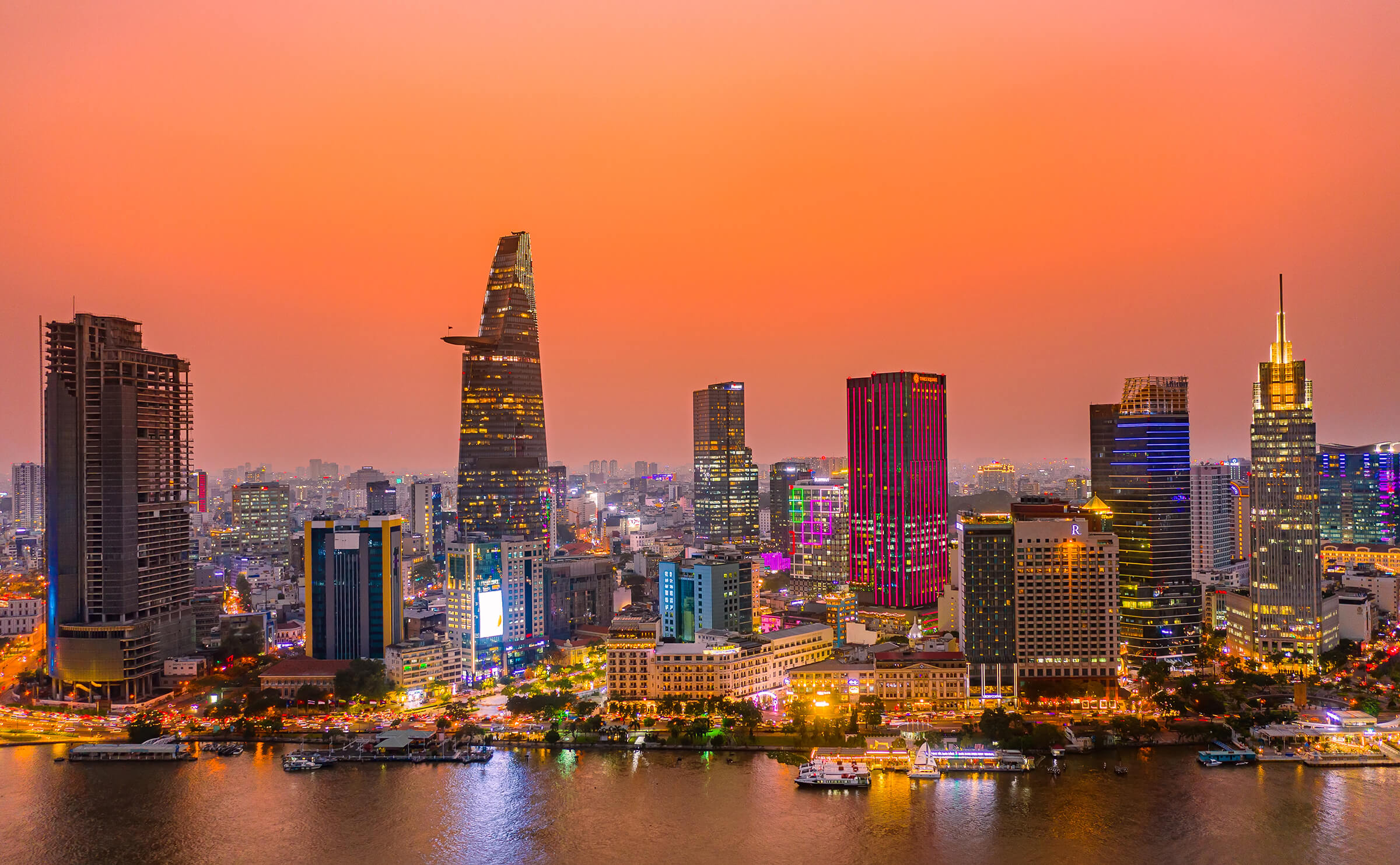
The contrast between the river and the central skyline becomes especially attractive around sunset.
17. Saigon Waterbus
The Saigon Waterbus provides a different way to see parts of the city from the river. It is particularly useful for travelers who want to combine urban transportation with sightseeing.
Check current schedules and routes before planning a trip around it because operating times and service patterns can change.
18. Explore Ho Chi Minh City by Motorbike
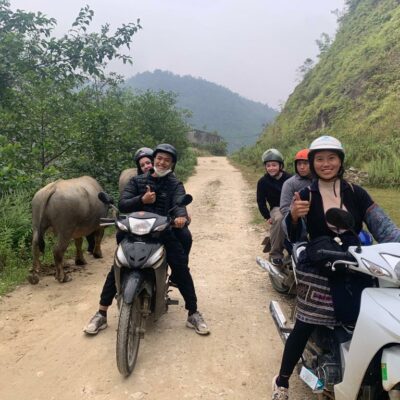
A motorbike tour is one of the best ways to experience the city beyond the main monuments. Instead of moving only between tourist sites in District 1, a local driver can take you through food streets, residential neighborhoods, markets and smaller districts.
This is especially effective in the evening when the city’s food culture becomes more active. The official city tourism guide also recommends motorbike tours as a way to experience Ho Chi Minh City at street level.
19. Ho Chi Minh City Street Food
Food is arguably the city’s strongest attraction. The southern food scene includes dishes from across Vietnam alongside specialties shaped by local ingredients and culinary traditions.
Try com tam, banh mi, hu tieu, banh xeo, bun thit nuong, oc, chao long and Southern-style desserts. Official tourism material highlights dishes such as banh mi, com tam and banh xeo among the city’s food experiences.
20. Try Com Tam
Com tam, or broken rice, is one of the dishes most strongly associated with Southern Vietnam. A typical plate combines grilled pork with broken rice, pickles, vegetables, fish sauce and other accompaniments.
It is especially good for breakfast or lunch.
21. Try Hu Tieu
Hu tieu is another Southern favorite, especially common in the south and Mekong Delta. The dish can appear in several forms, from noodle soup to versions served with broth on the side.
Ask locals which style the restaurant specializes in rather than assuming every bowl tastes the same.
22. Try Banh Xeo
Southern-style banh xeo is often larger and filled generously with shrimp, pork and bean sprouts. It is eaten with fresh herbs and dipping sauce.
A local food tour can show you how to wrap the pancake correctly with herbs and lettuce.
23. Explore Vietnamese Coffee Culture
Ho Chi Minh City has an enormous café culture.
Try ca phe sua da, coconut coffee, black coffee or other local variations. Many cafés occupy narrow buildings or hidden upper floors, so don’t assume the best coffee shop is necessarily the largest one.
For travelers who like architecture, seek out cafés inside renovated old buildings.
24. Ho Chi Minh City at Night
The city becomes more energetic after sunset.
A good evening can combine Nguyen Hue Walking Street, dinner, a rooftop view, local coffee and a motorbike food tour.
For nightlife, District 1 and the Bui Vien area are the most obvious choices, but travelers who prefer a quieter evening can explore riverside restaurants or rooftop lounges instead.
25. Bui Vien Walking Street
Bui Vien is Ho Chi Minh City’s best-known backpacker nightlife area. It is crowded, noisy and energetic, particularly later at night.
Visit if you want to experience the city’s most concentrated nightlife scene. Skip it if you prefer quiet cafés, cultural experiences or local neighborhoods.
26. Rooftop Bars
The city’s skyline creates excellent opportunities for rooftop dining and drinks. A rooftop around District 1 can provide views toward Bitexco Financial Tower, the Saigon River and the growing downtown skyline.
Sunset is usually the most attractive time to arrive.
27. Ho Chi Minh City for Families
Families can comfortably visit the city by choosing shorter sightseeing blocks. Good options include the Central Post Office area, Reunification Palace, selected museums, the riverfront and food experiences.
Private transportation is especially useful when traveling with young children because crossing busy streets and changing transport modes repeatedly can become tiring.
28. Ho Chi Minh City for Couples
Couples can combine historic architecture with food and nightlife. A private evening motorbike food tour, sunset along the Saigon River, dinner in District 1 and a rooftop drink make an easy romantic evening.
For a quieter experience, stay around District 3 or a boutique property away from Bui Vien.
29. Ho Chi Minh City for Solo Travelers
The city is easy to explore independently, particularly around District 1. Walking routes, museums, cafés and food tours provide plenty of ways to spend a day without needing a private vehicle.
A small-group or private food tour can also help solo travelers experience neighborhoods that are difficult to navigate alone.
30. Ho Chi Minh City for Seniors
The biggest challenge for seniors is often heat and traffic rather than a lack of attractions. Private transportation is recommended for longer sightseeing days.
Choose accommodations near the attractions you care about and divide sightseeing into morning and late-afternoon sessions.
31. Ho Chi Minh City for Photographers
The city offers a remarkable combination of subjects: colonial architecture, street vendors, cafés, motorbikes, markets, skyscrapers, riverside scenes and neon-lit streets.
For architecture, start around the Central Post Office and Dong Khoi. For street photography, explore Cholon and local markets. For skyline photography, use the Saigon River or a rooftop at sunset.
32. Best Day Trip: Cu Chi Tunnels
The Cu Chi Tunnels remain one of the most popular day trips from Ho Chi Minh City. The site is best understood as a historical experience rather than an entertainment attraction.
Travelers can learn about the tunnel network, underground living conditions and wartime strategies. Combine it with the War Remnants Museum only if you are comfortable with an intensive history-focused day.
33. Best Day Trip: Mekong Delta
The Mekong Delta is the best nature-and-culture day trip from Ho Chi Minh City. For the shortest version, visit My Tho and Ben Tre. For a more meaningful experience, stay overnight in Can Tho so that you can take a boat to Cai Rang Floating Market early the next morning.
The difference between a rushed day trip and an overnight Delta visit is significant. Staying overnight gives you more time for small waterways, local meals, cycling and village life.
34. Best Day Trip: Tay Ninh
Tay Ninh is particularly interesting for travelers who want something beyond war history and food. The Cao Dai Holy See provides an introduction to Cao Dai, a uniquely Vietnamese religious tradition, while Ba Den Mountain provides a landscape contrast with the flat city and Delta.
This works best as a full-day private excursion.
35. Best Time for Ho Chi Minh City Day Trips
For Cu Chi, Mekong and Tay Ninh, start early. The temperature rises quickly, and leaving early also helps avoid some of the worst traffic leaving the city.
During the rainy season, private tours should have flexibility because heavy rain can affect road travel and boat schedules.
36. Getting to Ho Chi Minh City by Air in 2026
Most international visitors arrive at Tan Son Nhat International Airport. The airport now has three passenger-terminal functions, with Terminal 3 introduced in 2025. ACV states that Terminal 3 officially opened on April 19, 2025, and the Civil Aviation Authority noted that from April 28, 2025, Vietnam Airlines moved its domestic services to T3 except for certain routes, while Pacific Airlines and VASCO continued operating from T1.
Because terminal assignments can vary by airline and route, check the terminal shown on your booking or airline communication before traveling to the airport.
37. Getting From Tan Son Nhat Airport to the City
The airport is relatively close to central Ho Chi Minh City, but traffic can make the trip unpredictable.
Options include private hotel transfer, taxi, ride-hailing services and public buses. For first-time visitors arriving with large luggage, a pre-arranged private transfer is the easiest option.
During peak traffic periods, allow additional time rather than relying on a short estimated journey.
38. Tan Son Nhat Terminal 3 in 2026
Terminal 3 is particularly important for domestic travelers. ACV reported that the terminal was designed with self-service check-in, baggage-drop systems and electronic gates, and that free shuttle buses connect T1, T2 and T3.
If your itinerary includes a domestic connection in Ho Chi Minh City, allow enough time to identify the correct terminal, especially when changing airlines.
39. Ho Chi Minh City by Metro in 2026
Metro Line 1 is now an important new option for travelers. The line runs from Ben Thanh to Suoi Tien, covering about 19.7 kilometers and serving 14 stations, including central stations such as Ben Thanh, Opera House and Ba Son.
For tourists, the most useful section is the central corridor around Ben Thanh, Opera House and Ba Son. The metro is not yet a replacement for taxis or private cars across the whole city, but it adds a clean and predictable option for the areas it serves.
40. Ho Chi Minh City by Taxi
Taxis remain convenient, particularly for travelers carrying luggage or traveling in small groups.
Use established taxi companies or booking applications rather than accepting unsolicited rides from people approaching you at tourist attractions.
41. Ho Chi Minh City by Ride-Hailing
Ride-hailing applications are particularly useful for short trips. They allow you to see the estimated fare and destination before departure.
A local SIM or eSIM with mobile data makes this considerably easier.
42. Ho Chi Minh City by Bus
Public buses are inexpensive and cover large parts of the city, but they can be slower and less intuitive for first-time international visitors.
Use buses when you have time and are comfortable navigating the system. For a short vacation, private transportation can save considerable planning time.
43. Should You Rent a Motorbike?
Only when you are legally qualified and genuinely experienced riding in heavy traffic.
Ho Chi Minh City’s traffic can be intense, particularly at intersections and during peak periods. For visitors who simply want the experience of moving through the city by motorbike, riding as a passenger with a professional local driver is much easier.
44. Walking in Ho Chi Minh City
Walking is excellent within compact central areas, especially around the Central Post Office, Dong Khoi, Nguyen Hue, Opera House and Ben Thanh Market.
The main challenge is crossing streets. Walk steadily and predictably, watch the traffic rather than staring only at the vehicles closest to you, and use marked crossings where practical.
45. Where to Stay in District 1
District 1 remains the easiest base for first-time visitors. You are within convenient reach of Ben Thanh Market, Nguyen Hue, Dong Khoi, the Central Post Office, the Opera House, restaurants and nightlife.
The downside is that some parts of District 1 can be noisy and more tourist-oriented.
46. Where to Stay in District 3
District 3 is a strong alternative for travelers who want central access with a somewhat more residential atmosphere.
You remain close to major attractions while having easier access to local cafés and restaurants.
It is especially attractive for repeat visitors.
47. Where to Stay in District 5
District 5 is the right choice for travelers who are particularly interested in Cholon and Chinese-Vietnamese culture.
The area offers traditional food, temples, markets and a more local urban atmosphere than the main District 1 tourist zone.
48. Where to Stay in Binh Thanh
Binh Thanh is useful for longer stays and travelers who want easier access toward eastern Ho Chi Minh City.
It also provides access to local food and more residential neighborhoods while remaining relatively close to the central area.
49. Where to Stay in Thao Dien
Thao Dien in Thu Duc City is popular with international residents and offers restaurants, cafés, boutiques and a more relaxed atmosphere.
It is not the best base when your only priority is walking to the major historic landmarks, but it can be excellent for longer stays.
50. Best Area for First-Time Visitors
For most first-time visitors, choose District 1.
For couples who want a quieter atmosphere, consider District 3.
For food and cultural exploration, consider District 5.
For a longer, more relaxed stay, consider Binh Thanh or Thao Dien.
51. How Much Does Ho Chi Minh City Cost?
Ho Chi Minh City can work for almost every budget. Street food and local cafés remain affordable, while international restaurants, luxury hotels and rooftop venues can raise costs quickly.
The biggest difference usually comes from accommodation and transportation rather than basic local food.
A traveler who stays in a comfortable central hotel and eats a mixture of local and international food can maintain a reasonable budget. A luxury traveler can easily spend significantly more on five-star accommodation, private transportation and fine dining.
52. Money and Payment
Cards are increasingly accepted in hotels, shopping centers, modern restaurants and many tourism businesses.
However, carry some Vietnamese cash for:
Street food
Markets
Small cafés
Local shops
Small transport payments
The best approach is to use both card and cash.
53. Internet and SIM Cards
A Vietnamese SIM or eSIM is extremely useful in Ho Chi Minh City.
You will use mobile data for:
Maps
Ride-hailing
Translation
Restaurant searches
Hotel communication
Flight information
The city generally has strong mobile connectivity, although coverage can be less consistent when traveling into remote rural areas outside Ho Chi Minh City.
54. What to Eat in Ho Chi Minh City
A first-time food list should include com tam, banh mi, banh xeo, hu tieu, bun thit nuong, oc, che and Vietnamese coffee.
Don’t try to eat every famous dish at a formal restaurant. Some of the city’s best experiences happen at small neighborhood eateries and busy street stalls.
55. Best Ho Chi Minh City Food Experience
A private motorbike food tour is particularly effective because it combines transportation and dining.
Instead of sitting in District 1 all evening, a local driver can take you through several districts, stopping at family-run restaurants, markets and neighborhood food stalls.
This is one of the easiest ways for a first-time visitor to understand how broad the city’s food culture really is.
56. Best Ho Chi Minh City Morning Experience
Start with Vietnamese coffee and a local breakfast, then walk through the historic center.
A strong morning route is:
Reunification Palace → Central Post Office → Notre Dame Cathedral area → Dong Khoi → Opera House → Nguyen Hue
The official city weekend itinerary recommends a similar concentration of central historic attractions for a first visit.
57. Best Ho Chi Minh City Afternoon Experience
Use the hottest part of the day for indoor attractions.
Visit the War Remnants Museum, Fine Arts Museum or another cultural site, followed by a café break.
Return outdoors after about 4:00 PM when the heat begins to ease.
58. Best Ho Chi Minh City Evening Experience
For first-time visitors:
6:00 PM: Local dinner.
7:30 PM: Nguyen Hue Walking Street.
8:00 PM: Saigon River or rooftop.
9:00 PM: Dessert or Vietnamese coffee.
For food lovers, replace the walking route with a motorbike food tour.
59. Ho Chi Minh City for Luxury Travelers
Luxury travelers can stay in a historic five-star hotel or modern property overlooking the city skyline, arrange private cars, book private food tours and finish evenings at rooftop restaurants.
The city works particularly well as the luxury component of a longer itinerary before moving to a private Mekong lodge and Phu Quoc beach resort.
60. Ho Chi Minh City for Budget Travelers
Budget travelers can enjoy the city without sacrificing the main attractions.
Choose a central guesthouse, eat at local restaurants, use ride-hailing and walk between the major District 1 attractions.
Avoid staying exclusively in the most expensive tourist streets if price matters.
61. Ho Chi Minh City for Repeat Visitors
Repeat visitors should go beyond District 1.
Explore:
Cholon
District 3
District 5
Binh Thanh
Thao Dien
Local markets
Small cafés
Neighborhood food streets
The official city guide itself encourages travelers to explore beyond the central landmarks, particularly through Cholon and local food experiences.
62. Ho Chi Minh City Off the Beaten Path
For something less conventional, consider a morning market, local coffee crawl, neighborhood food tour, traditional medicine area, hidden café or riverfront exploration.
The city’s most memorable moments often happen between the major attractions rather than inside them.
63. Ho Chi Minh City for Business Travelers
For business trips, accommodation near central District 1 or Thu Duc’s business districts may be more convenient depending on your meetings.
If you need quick airport access, check traffic patterns rather than assuming a hotel is “close” based only on distance.
64. Safety in Ho Chi Minh City
Ho Chi Minh City is generally straightforward for tourists when normal urban precautions are followed.
The most common practical concerns are traffic, petty theft in crowded areas and motorcycle-related snatching in busy streets.
Keep phones and cameras away from the road edge, especially when standing beside busy traffic.
Use reputable transport providers and avoid carrying large amounts of cash.
65. Crossing the Road
Crossing a busy Ho Chi Minh City street can initially feel intimidating.
Walk at a steady, predictable pace when there is a suitable opening, keep watching traffic and avoid sudden movements.
Locals may appear to move through traffic effortlessly because they understand the rhythm of the street. Visitors should prioritize their own comfort and use pedestrian crossings where possible.
66. Ho Chi Minh City During Tet
Tet, the Vietnamese Lunar New Year, is a fascinating period but requires more preparation.
Before and during the holiday, some businesses close or operate reduced hours, while transportation and domestic travel can become much busier.
On the positive side, the city can become quieter in certain periods as residents return to their hometowns.
If you want to experience Tet, book accommodation and transportation well ahead.
67. Ho Chi Minh City for Christmas and New Year
The city becomes lively around the end-of-year holiday period.
Hotels, shopping centers, cafés and restaurants often organize special events, and central streets can become particularly busy.
It is a good time for travelers who enjoy an energetic urban atmosphere.
68. What to Wear in Ho Chi Minh City
Light, breathable clothing is ideal for most of the year.
Bring comfortable shoes because even short walking routes can become longer than expected.
For temples and religious sites, carry something that covers shoulders and knees.
An umbrella or compact rain jacket is useful during the wet season.
69. What to Pack
A practical Ho Chi Minh City packing list includes:
Breathable clothing
Comfortable walking shoes
Sun protection
Light rain jacket
Reusable water bottle
Power bank
Small crossbody or secure bag
Basic travel medication
Travelers visiting the Mekong Delta after Ho Chi Minh City should also bring insect repellent and clothing suitable for boat and countryside activities.
70. Should You Visit Ho Chi Minh City Before the Mekong Delta?
Yes.
The sequence Ho Chi Minh City → Mekong Delta works particularly well because the change in environment is immediate. You start in one of Southeast Asia’s busiest cities and then move into a landscape shaped by rivers, fruit gardens and waterways.
It creates a much stronger contrast than visiting the Delta first.
71. Should You Visit Ho Chi Minh City Before Phu Quoc?
Also yes, for most travelers.
The city provides culture, history and food, while Phu Quoc allows you to slow down afterward.
The progression from city → river → island is one of the most satisfying structures for a Southern Vietnam itinerary.
72. Ho Chi Minh City + Mekong Delta + Phu Quoc
For a complete Southern Vietnam journey, consider:
Days 1–3: Ho Chi Minh City.
Days 4–5: Mekong Delta.
Days 6–9: Phu Quoc.
This is a strong 9-day route with enough variety without excessive hotel changes.
73. Ho Chi Minh City + Mekong Delta 5-Day Itinerary
For a short trip:
Day 1: Central Ho Chi Minh City.
Day 2: Reunification Palace, War Remnants Museum, central architecture.
Day 3: Cu Chi or food experience.
Day 4: Ben Tre or Can Tho.
Day 5: Mekong Delta and return.
This is a good option for travelers who don’t have enough time for Phu Quoc.
74. Ho Chi Minh City 3-Day Itinerary
Day 1
Explore the historic center: Reunification Palace, Central Post Office, Notre Dame Cathedral area, Dong Khoi and Nguyen Hue.
Day 2
Visit the War Remnants Museum, Cholon, Binh Tay Market and Thien Hau Pagoda.
Day 3
Take a food tour, explore local neighborhoods and enjoy the city at night.
This gives you a broad introduction without excessive rushing.
75. Ho Chi Minh City 4-Day Itinerary
With four days, add a half-day trip to Cu Chi or spend more time exploring Cholon and local neighborhoods.
A good structure is:
Day 1: Historic center.
Day 2: Museums + Cholon.
Day 3: Cu Chi.
Day 4: Food, shopping and nightlife.
76. Ho Chi Minh City 5-Day Itinerary
With five days, consider adding a one-day Mekong Delta trip.
Days 1–3: City.
Day 4: Mekong Delta.
Day 5: City + departure.
For a more immersive Delta experience, replace the day trip with an overnight stay.
77. Best Ho Chi Minh City Day Trip for First-Time Visitors
Choose Cu Chi Tunnels if history is your main interest.
Choose Ben Tre if you want countryside and waterways.
Choose Tay Ninh if you want religious culture and a mountain experience.
Choose Can Tho if you have enough time for an overnight stay.
78. Is Ho Chi Minh City Worth Visiting?
Absolutely.
The city does not have the polished historic atmosphere of Hoi An or the imperial monument concentration of Hue. Its attraction is different.
Ho Chi Minh City is a living, constantly changing metropolis where history, food, commerce, architecture and everyday life collide.
The official tourism guide describes the city as a place where old and new Vietnam exist within a compact urban environment.
79. What Makes Ho Chi Minh City Different From Hanoi?
Hanoi generally feels older, more intimate and more strongly connected to Northern Vietnamese traditions, while Ho Chi Minh City feels faster, more commercial and more outward-looking.
Ho Chi Minh City is particularly strong for:
Southern food
Nightlife
Shopping
Modern architecture
Mekong access
Street life
Hanoi is particularly strong for:
Old Quarter
Lakes
Imperial history
Northern Vietnamese cuisine
Traditional architecture
Visiting both provides a much better understanding of Vietnam as a whole.
80. What Makes Ho Chi Minh City Different From Da Nang?
Da Nang is a coastal city defined by beaches and nearby mountains.
Ho Chi Minh City is an enormous inland urban environment defined by traffic, commerce, history and nightlife.
Choose Da Nang for beaches and mountains.
Choose Ho Chi Minh City for city life and Southern Vietnamese culture.
81. Best Ho Chi Minh City Travel Tips for 2026
Book your airport transfer carefully and check the terminal on your airline ticket because Tan Son Nhat’s Terminal 3 now handles substantial domestic traffic.
Use Metro Line 1 when it fits your route, especially around Ben Thanh, Opera House and Ba Son.
Start sightseeing early.
Use air-conditioned private transportation for longer excursions.
Carry cash for street food and small businesses.
Don’t try to cross the entire city during peak traffic just to visit one minor attraction.
Save the best food experience for the evening.
82. Common Ho Chi Minh City Travel Mistakes
Trying to See Every Landmark in One Day
The city is much larger than the tourist map suggests.
Staying Only in District 1
District 1 is convenient, but Cholon, District 3, Binh Thanh and other neighborhoods reveal much more of the city.
Ignoring the Weather
Heat and rain can significantly affect how much you can comfortably do outdoors.
Eating Only at Tourist Restaurants
Some of the best food is found in ordinary neighborhood restaurants.
Carrying Your Phone Close to the Road
This increases the risk of theft from passing motorbikes.
Forgetting About Airport Traffic
Leave extra time for Tan Son Nhat, particularly during busy periods.
83. Best Ho Chi Minh City Experience for Couples
For couples, a good evening is simple: private motorbike food tour, sunset by the Saigon River, rooftop drink and a late walk around Nguyen Hue.
For daytime, combine the Central Post Office, colonial architecture and a relaxed lunch rather than trying to visit every museum.
84. Best Ho Chi Minh City Experience for Families
Families should choose a private city tour that combines major landmarks with breaks.
Reunification Palace, Central Post Office, the riverfront and selected markets provide enough variety.
You can then add Cu Chi or the Mekong Delta depending on the children’s ages.
85. Best Ho Chi Minh City Experience for Food Lovers
A three-hour evening motorbike food tour is one of the best choices.
You can travel between districts, taste multiple dishes and see the city at the same time.
A local female guide can also explain how Southern dishes differ from the food you may have already tried in Hanoi or Central Vietnam.
86. Best Ho Chi Minh City Experience for History Lovers
Build your itinerary around:
Reunification Palace
War Remnants Museum
Cu Chi Tunnels
Central Post Office
Ho Chi Minh City Museum
Cholon
The combination covers colonial history, war history, political history and the city’s multicultural development.
87. Best Ho Chi Minh City Experience for Repeat Travelers
Go beyond District 1.
Spend a day in Cholon and District 5, explore local cafés, take a food tour through residential areas, ride the metro toward the eastern city or discover lesser-known museums.
The city becomes much more interesting once you stop treating the central tourist district as the whole destination.
88. Where to Go After Ho Chi Minh City
The natural next destinations are:
Mekong Delta
Phu Quoc
Mui Ne
Con Dao
Tay Ninh
For a classic Southern Vietnam trip, choose the Mekong Delta next.
For a relaxing finish, continue to Phu Quoc.
89. Final 2026 Planning Checklist
Before leaving for Ho Chi Minh City, make sure you have confirmed your accommodation, airport terminal, arrival transfer, mobile data, travel insurance and any time-sensitive attractions.
For a multi-city Southern Vietnam itinerary, decide in advance whether you want a Mekong overnight stay or a simple day trip. The overnight option generally produces a richer experience but requires more planning.
If you are flying domestically from Ho Chi Minh City, check the terminal assignment before departure because Terminal 3 changed the airport’s domestic passenger flow beginning in 2025.
Final Thoughts
A good Ho Chi Minh City Travel Guide 2026 should not treat the city as simply a checklist of famous landmarks. The Reunification Palace, War Remnants Museum, Central Post Office, Notre Dame Cathedral area, Ben Thanh Market, Cholon and Nguyen Hue are important, but they are only the beginning. The official city guide presents Ho Chi Minh City as a place where historic architecture and contemporary urban life exist together, and that contrast is exactly what makes the city interesting.
For first-time visitors, three days is an excellent starting point. Spend one day exploring the historic center, one day on museums and Cholon, and one day on food, neighborhoods and nightlife. Add another half or full day for the Cu Chi Tunnels or Mekong Delta if your schedule allows.
Ho Chi Minh City is also changing quickly. In 2026, visitors can make use of the new Metro Line 1, while the opening of Tan Son Nhat Terminal 3 has changed how many domestic travelers move through the airport.
The most rewarding way to visit is to combine the famous attractions with experiences that show how people actually live: eat breakfast at a local restaurant, drink Vietnamese coffee, explore a neighborhood market, ride through the city with a local driver, visit Cholon, watch the river at sunset and stay out after dark when the streets become full of food and conversation.
For a larger Southern Vietnam journey, the ideal sequence is Ho Chi Minh City → Mekong Delta → Phu Quoc. The city gives you energy and history, the Delta gives you rivers and agriculture, and Phu Quoc gives you beaches and a slower pace.
Come for Saigon’s famous landmarks, but stay long enough to experience the city between them. That is where Ho Chi Minh City really begins.
Explore Ho Chi Minh City With Vietnam Women Travel
For travelers looking for private and small-group experiences led by women, Vietnam Women Travel can create customized Ho Chi Minh City itineraries around food, history, neighborhoods and local life. A private experience can include the Reunification Palace, War Remnants Museum, Central Post Office, Cholon, Binh Tay Market, Thien Hau Pagoda, Ben Thanh Market, Nguyen Hue, Saigon River and local food streets, with additional excursions to the Cu Chi Tunnels or Mekong Delta.
A women-led motorbike or Vespa experience is particularly useful for travelers who want to see more than District 1. Instead of moving only between famous landmarks, the route can include local markets, family-run restaurants, residential neighborhoods and hidden corners of the city. The women-led format is suitable for couples, families, solo travelers and private groups, rather than being limited to women-only travel.
Contact Vietnam Women Travel
VIETNAM WOMEN TRAVEL
Address: 91 Tho Nhuom Street, Hoan Kiem District, Hanoi, Vietnam
Phone / WhatsApp 24/7: +84 982 416 518
Second Contact: +84 981 090 989
Website: vietnamwomentravel.com
Private Ho Chi Minh City Tours Led By Women
Ho Chi Minh City Motorbike Tours Led By Women
Ho Chi Minh City Vespa Tours Led By Women
Ho Chi Minh City Food Tours Led By Women
Cu Chi Tunnels Private Tours
Mekong Delta Private Tours
Southern Vietnam Private Tours
Private & Small-Group Vietnam Experiences
Discover Ho Chi Minh City with local women guides—from the city’s historic landmarks and hidden food streets to Cholon, the Saigon River, local markets and the neighborhoods beyond the main tourist route.