Best Things to Do in Ho Chi Minh City
Ho Chi Minh City is the energetic heart of Southern Vietnam and one of the most rewarding cities in the country for travelers who enjoy history, street food, architecture, markets, coffee, shopping, nightlife and local experiences. Still commonly called Saigon, the city combines French-colonial landmarks, traditional temples, modern skyscrapers, narrow alleyways and millions of daily motorcycle journeys.
The best things to do in Ho Chi Minh City are not limited to famous monuments. You can explore the historic center in the morning, eat broken rice at a neighborhood restaurant for lunch, discover the Chinese quarter in the afternoon and ride through local streets on a motorbike after sunset. The city’s official tourism information highlights attractions including the War Remnants Museum, Notre Dame Cathedral area, Central Post Office, Ben Thanh Market, Jade Emperor Pagoda and Cholon, while also recommending motorbike tours and street food as ways to experience the city beyond its major landmarks.
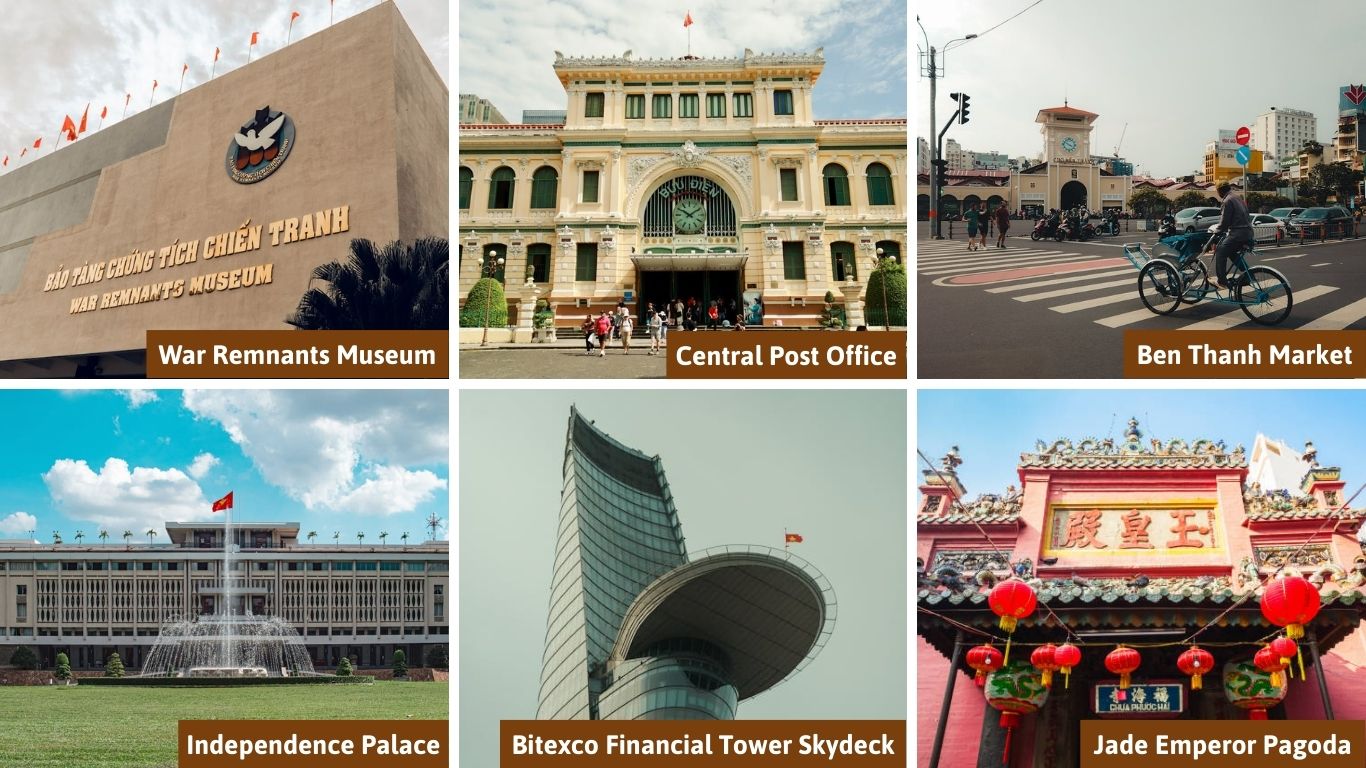
Best Things to Do in Ho Chi Minh City at a Glance
| Experience | Best For | Suggested Time |
|---|---|---|
| Reunification Palace | History | 1.5–2 hours |
| War Remnants Museum | Modern history | 1.5–2 hours |
| Central Post Office | Architecture | 30–45 minutes |
| Notre Dame Cathedral area | Colonial heritage | 20–30 minutes |
| Ben Thanh Market | Shopping & food | 1–2 hours |
| Nguyen Hue Walking Street | City life | 1–2 hours |
| Cholon & Binh Tay Market | Culture | 2–4 hours |
| Thien Hau Pagoda | Religion & architecture | 30–60 minutes |
| Street-food tour | Food | 2–4 hours |
| Motorbike tour | Local life | 3–4 hours |
| Saigon River | Sunset & views | 1–2 hours |
| Cu Chi Tunnels | History | Half day |
| Mekong Delta | Countryside | Full day or overnight |
| Metro Line 1 | Modern city experience | 1–2 hours |
| Rooftop bar | Night views | 1–2 hours |
1. Visit the Reunification Palace
The Reunification Palace, formerly the Independence Palace, is one of the most important historical places to visit in Ho Chi Minh City. The building served as the presidential palace of South Vietnam and became closely associated with the events of April 30, 1975.
Inside, visitors can explore official reception rooms, conference halls, offices, residential areas and the underground command center. The official tourism authority describes the building as a special national monument with more than 100 rooms and preserved interiors dating largely from the 1960s.
Allow at least 1.5 hours. History enthusiasts can easily spend longer examining the architectural details and underground facilities.
2. Explore the War Remnants Museum
The War Remnants Museum is one of the city’s most important museums and one of the strongest places to learn about the Vietnam War from a Vietnamese perspective. Its exhibitions include photographs, documents, military equipment and personal stories.
The museum can be emotionally difficult because some displays contain graphic images. It is not a light sightseeing stop, but it provides important historical context for understanding modern Vietnam. Official tourism information lists the museum among Ho Chi Minh City’s must-see attractions and notes its extensive collection of photographs and military artifacts.
Plan around two hours if you want to read the displays carefully.
3. See the Central Post Office
The Saigon Central Post Office is one of the city’s most recognizable French-colonial landmarks. Its large interior, high ceilings, historic maps and old-style details make it more interesting than a quick exterior photograph suggests.
It is located directly beside the Notre Dame Cathedral area, so the two attractions can easily be combined. Continue afterward along Dong Khoi Street toward the Opera House.
4. Visit the Notre Dame Cathedral Area
The Notre Dame Cathedral area remains one of the classic landmarks of central Ho Chi Minh City, although visitors should check current access and restoration conditions before planning an interior visit.
The surrounding streets are more important for many travelers than the building itself because they connect several historic landmarks in one compact walking route. The official city guide recommends walking between the cathedral area, Central Post Office, Dong Khoi Street and the Opera House.
5. Walk Down Dong Khoi Street
Dong Khoi Street is one of the historic commercial streets of central Saigon. Along the route you will find colonial buildings, luxury hotels, boutiques, cafés, restaurants and the Opera House.
It is one of the easiest places to see how old Saigon and modern Ho Chi Minh City have been layered together.
Walk slowly rather than simply using the street as a route between attractions.
6. See the Saigon Opera House
The Saigon Opera House, also known as the Municipal Theatre, is an impressive French-colonial building in the center of the city. Its ornate façade makes it particularly attractive for architecture lovers and photographers.
Check the current performance schedule if you would like to attend a show rather than simply photograph the exterior.
7. Visit Ho Chi Minh City Hall
The historic Ho Chi Minh City Hall is one of the city’s most photographed buildings. The building is generally admired from outside, particularly from Nguyen Hue Walking Street.
Visit during the day for architectural details and return after dark to see the illuminated façade.
8. Walk Along Nguyen Hue Walking Street
Nguyen Hue Walking Street is one of the best places to experience modern Ho Chi Minh City. The broad pedestrian boulevard becomes especially lively after sunset, when local residents, families, young people, performers and visitors gather in the center.
The street is also surrounded by restaurants, cafés, shopping and some of the city’s most famous historic buildings.
Come around 6:00–8:00 PM for the strongest atmosphere.
9. Explore the Old Apartment Buildings
One of the more unusual things to do in Ho Chi Minh City is exploring old apartment buildings that have been transformed into cafés, boutiques and small creative businesses.
The official city guide specifically recommends former office buildings and old apartment blocks such as 42 Nguyen Hue and 22 Ly Tu Trong as places where visitors can find independent shops and cafés.
These spaces offer a more contemporary experience than traditional sightseeing.
10. Shop Around Ben Thanh Market
Ben Thanh Market is one of the most recognizable symbols of Ho Chi Minh City. Inside you can find clothing, textiles, souvenirs, coffee, spices, dried foods, fresh produce and prepared dishes.
It is a good first stop for travelers who want to understand the variety of products available in Southern Vietnam.
Go early for food and fresh produce. Visit later in the day if shopping and souvenirs are your main priority.
11. Eat at Ben Thanh Market
The market can also be a useful introduction to Southern Vietnamese food.
Look for dishes such as:
Com tam
Banh xeo
Bun thit nuong
Hu tieu
Che
Fresh fruit
Rather than ordering a single large meal, try smaller portions and sample several things.
12. Explore Cholon
Cholon, Ho Chi Minh City’s historic Chinese quarter, offers an entirely different atmosphere from District 1.
The district is filled with temples, markets, traditional pharmacies, Chinese-Vietnamese restaurants and old commercial streets. The official city guide recommends Cholon, Binh Tay Market and Thien Hau Pagoda for travelers interested in the city’s Chinese heritage.
Set aside at least half a day if you want to explore properly.
13. Visit Binh Tay Market
Binh Tay Market is the commercial center of Cholon and feels more locally oriented than Ben Thanh Market.
The building itself is worth seeing, but the surrounding streets are just as interesting. Watch traders move goods, explore food stalls and observe the daily rhythm of the district.
Morning is generally the best period for activity.
14. Visit Thien Hau Pagoda
Thien Hau Pagoda is one of the most atmospheric temples in Cholon. The building is associated with the Chinese-Vietnamese community and is dedicated to Mazu, the sea goddess.
Incense coils hang from the ceiling, creating an especially distinctive atmosphere.
Dress respectfully and avoid interrupting worship when taking photographs.
15. Explore Local Temples and Traditional Streets
Beyond Thien Hau, Cholon contains smaller temples and family businesses that reveal how Chinese-Vietnamese culture has shaped Southern Vietnam.
A local guide can explain the symbolism behind the shrines, incense, statues and architectural details instead of treating the temples simply as photo stops.
16. Visit the Jade Emperor Pagoda
The Jade Emperor Pagoda is another important religious site in the city.
The temple contains elaborate statues, woodwork, incense and religious imagery associated with Taoist and Buddhist traditions.
It is relatively compact, so an hour is generally enough.
The official city guide lists the Jade Emperor Pagoda among the principal places worth visiting in Ho Chi Minh City.
17. Visit the Fine Arts Museum
The Ho Chi Minh City Museum of Fine Arts occupies a historic building and contains Vietnamese paintings, sculptures and other artworks.
It is a good choice when you want to spend an hour or two somewhere quieter after the intensity of the streets.
For travelers interested in Vietnamese culture beyond war history, the museum provides useful context.
18. Explore Ho Chi Minh City Museum
The Ho Chi Minh City Museum offers another perspective on the city’s history, development and cultural heritage.
The historic building itself is attractive, and the museum can be combined with other District 1 landmarks.
History enthusiasts can use it to connect the city’s colonial past with its modern development.
19. Explore the Saigon River
The Saigon River is one of the best places to slow down in the middle of the city.
Walk along the riverfront, sit at a café or choose a restaurant with river views.
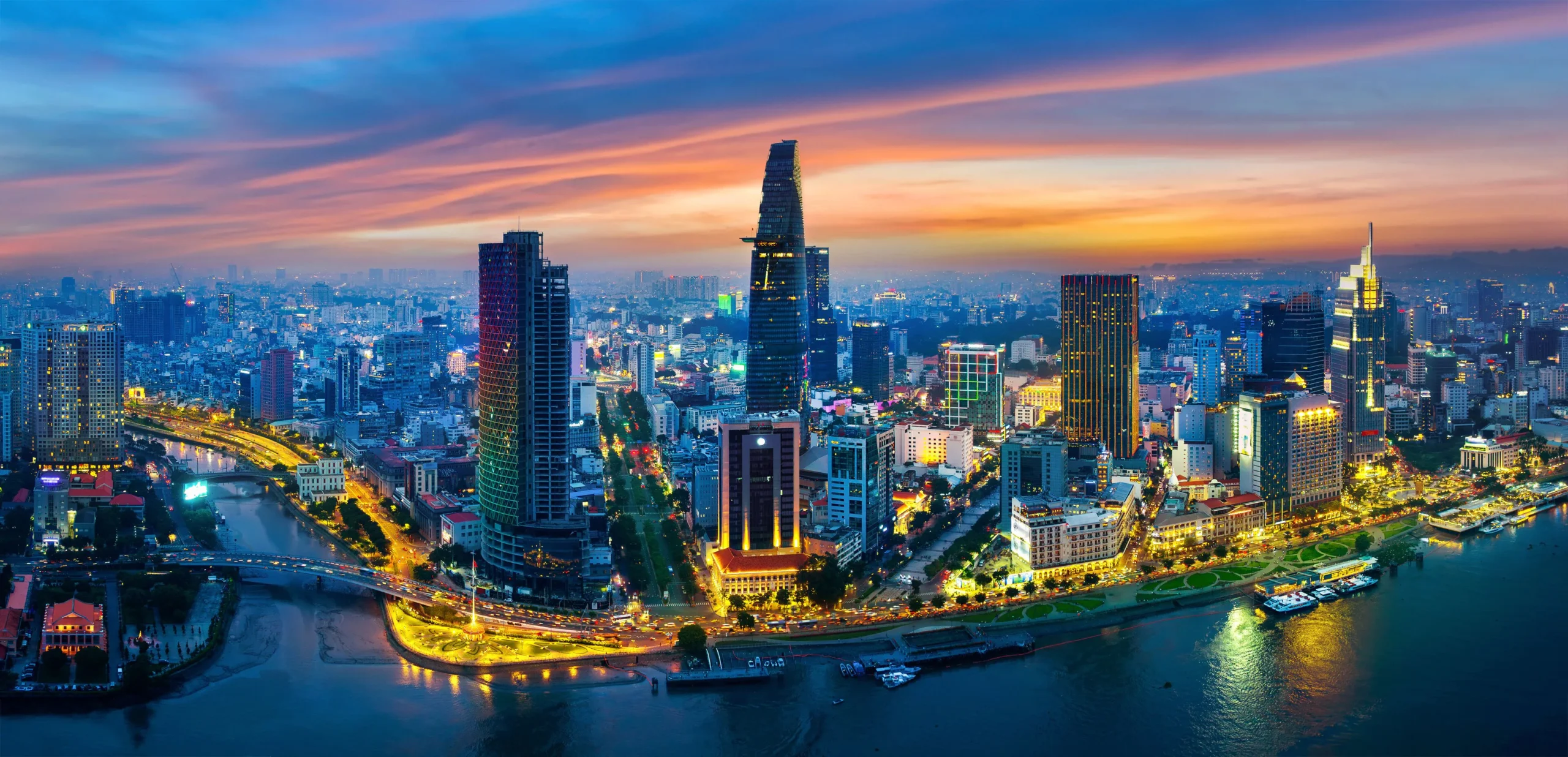
The skyline becomes particularly impressive around sunset when the light catches the glass towers and bridges.
20. Take a Saigon River Cruise
An evening Saigon River cruise is an easy way to see the city from a completely different perspective.
Choose a short sunset or evening cruise if you want scenery without committing an entire night to the water.
Couples often enjoy this experience, but it also works for families and private groups.
21. Ride the Saigon Waterbus
The Saigon Waterbus is another way to experience the city from the river. It can be useful both as transportation and as a sightseeing experience.
Check the current route and timetable before planning your day because operational schedules can change.
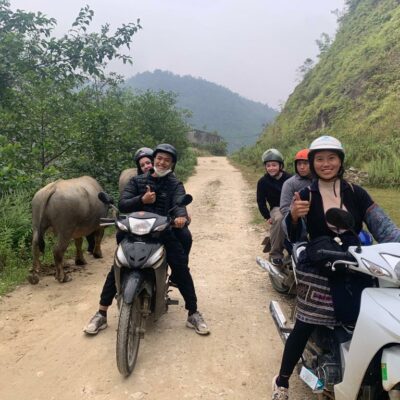
22. Explore Ho Chi Minh City by Motorbike
One of the best things to do in Ho Chi Minh City is to see it from the back of a motorbike.
The city is too large to understand fully from the main attractions alone. A local driver can take you through food streets, markets, residential neighborhoods, small alleys and districts that most visitors never reach.
The official city tourism guide specifically recommends motorbike tours as a way to experience the city’s energy at street level, particularly in the evening.
23. Take a Ho Chi Minh City Vespa Tour
A Vespa tour offers a slightly slower and more relaxed version of a motorbike experience.
A local driver can take you through neighborhoods, food streets, old markets, cafés and riverside roads while you remain a passenger.
For couples and small private groups, this can be one of the most enjoyable ways to experience the city.
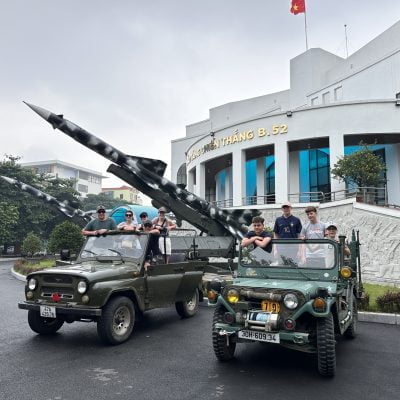
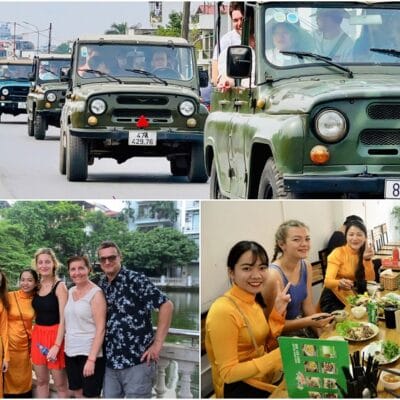
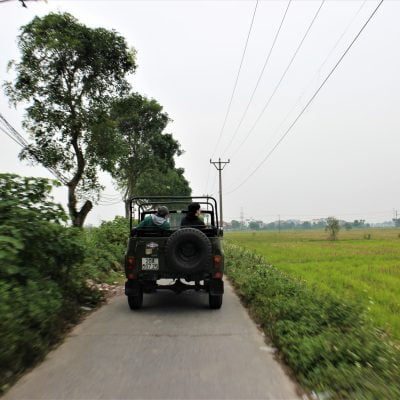
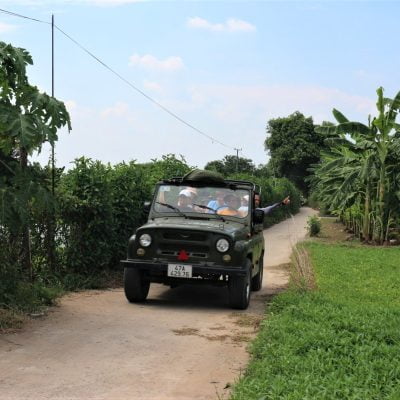
24. Take a Private Jeep Tour
A private Jeep tour is another option for travelers who prefer an open-air vehicle.
It works particularly well for exploring the broader city and combining architecture, local neighborhoods, markets and food stops.
A Jeep also makes it easier to stop for photographs without repeatedly getting on and off a motorbike.
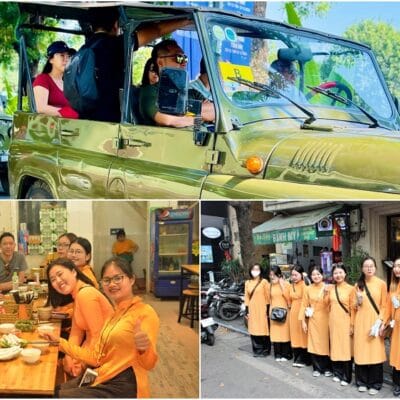
25. Join a Ho Chi Minh City Food Tour
A food tour should be high on your list.
Ho Chi Minh City has an extraordinary variety of street food, and many of the best places are outside the main tourist area.
A local guide can take you between districts while explaining how dishes differ from Northern and Central Vietnamese cuisine.
The official tourism guide highlights street food as one of the city’s defining experiences, with dishes such as banh mi, Southern-style banh xeo and broken rice among the specialties visitors should try.
26. Eat Com Tam
Com tam, or broken rice, is one of the most iconic dishes of Southern Vietnam.
A typical plate includes grilled pork, broken rice, vegetables, pickles and fish sauce.
It is often eaten for breakfast or lunch.
Try it at a local neighborhood restaurant rather than only at a tourist-oriented venue.
27. Eat Banh Mi
Vietnamese banh mi is an obvious choice, but Ho Chi Minh City has its own local interpretations.
Look for crisp baguettes filled with pork, pâté, herbs, pickles, chili and house-made sauces.
A good banh mi can be a quick breakfast or late-night snack.
28. Try Banh Xeo
Southern banh xeo is generally large, crisp and filled with shrimp, pork and bean sprouts.
The traditional way to eat it is to break off pieces, wrap them in lettuce and herbs, then dip them into sauce.
It is one of the easiest dishes for sharing.
29. Try Hu Tieu
Hu tieu is one of Southern Vietnam’s characteristic noodle dishes.
You will encounter different versions throughout the city, including bowls with pork, shrimp, seafood and vegetables.
It is especially worthwhile for travelers who want to compare Southern noodle culture with pho in Northern Vietnam and bun bo Hue in Central Vietnam.
30. Explore Ho Chi Minh City’s Coffee Culture
Coffee is part of daily life in the city.
Try ca phe sua da, coconut coffee, black coffee or newer specialty versions.
One of the pleasures of Ho Chi Minh City is finding tiny cafés in old buildings, upstairs apartments and narrow alleyways.
31. Join a Coffee Tour
A local coffee tour can introduce you to several styles and preparation methods in a short period.
It can also take you into older neighborhoods and hidden cafés that are easy to miss when traveling independently.
For first-time visitors, this is a fun alternative to visiting another conventional museum.
32. Visit Tao Dan Park
Tao Dan Park is a green space in the center of the city and provides a welcome break from traffic.
Come in the early morning when locals exercise, walk and socialize.
The park can also be useful for travelers who want to see everyday city life rather than tourist attractions.
33. See Local Morning Life
One of the best free things to do is simply wake early.
Walk around a local neighborhood, visit a market, watch street vendors prepare breakfast and stop for Vietnamese coffee.
The city feels completely different before the streets become busy.
34. Visit a Local Wet Market
For travelers interested in everyday Vietnamese life, local wet markets can be more revealing than tourist markets.
Look for fresh seafood, vegetables, herbs, meat, fruit and prepared food.
Go with a local guide if you want to understand unfamiliar ingredients and market customs.
35. Explore Ho Chi Minh City at Night
The city is particularly lively after dark.
A good evening can combine:
Street food
Nguyen Hue
Saigon River
Rooftop bar
Live music
Motorbike tour
The official tourism guide recommends evening motorcycle experiences because food vendors and street activity become especially lively after dark.
36. Visit Bui Vien Walking Street
Bui Vien is the city’s best-known backpacker nightlife district.
It is crowded, noisy and energetic, with bars, restaurants, hostels, music and late-night activity.
Go when you specifically want nightlife. Avoid it when you’re looking for quiet cultural experiences.
37. Enjoy a Rooftop Bar
Ho Chi Minh City’s skyline is particularly impressive from above.
A rooftop bar around District 1 can provide views of:
Bitexco Financial Tower
Saigon River
Nguyen Hue
Modern skyscrapers
Go around sunset if you want both daylight and nighttime views.
38. See the City From Bitexco Area
The Bitexco Financial Tower has long been one of the city’s most recognizable modern landmarks.
Even if you don’t visit an observation area, the surrounding streets provide excellent views of the city’s changing skyline.
It is especially photogenic after sunset.
39. Explore Hidden Cafés and Old Buildings
Ho Chi Minh City’s old apartment buildings have become unlikely creative spaces.
The official city guide recommends places such as 42 Nguyen Hue and 22 Ly Tu Trong, where old structures have been converted into independent shops and cafés.
These are ideal for travelers who want a less conventional side of the city.
40. Shop for Local Products
Beyond fashion and souvenirs, look for:
Vietnamese coffee
Pepper
Dried fruit
Tea
Handmade crafts
Silk
Coconut products
Local snacks
Small specialty shops can offer more interesting products than large tourist stores.
41. Explore Modern Shopping Centers
For travelers who prefer air conditioning and modern shopping, central Ho Chi Minh City has department stores and large shopping centers.
This is particularly useful during the hottest part of the afternoon or during heavy rain.
Combine shopping with a café or restaurant rather than spending the entire day indoors.
42. Visit a Traditional Medicine Street
The Chinese quarter around Cholon contains traditional medicine stores and businesses that have been operating for generations.
The shops are particularly interesting for travelers interested in traditional Chinese-Vietnamese culture.
Do not purchase medicines simply because a shopkeeper recommends them; ask a qualified professional when medical treatment is involved.
43. Explore the City by Night With Local Women Guides
A women-led motorbike or Vespa tour can be a particularly comfortable way to experience Ho Chi Minh City after dark.
Instead of focusing only on the major landmarks, a local guide can take you through food streets, residential areas, markets and hidden corners.
The emphasis should be on understanding the city rather than merely riding around taking photographs.
44. Visit Cu Chi Tunnels
The Cu Chi Tunnels are one of the most important day trips from Ho Chi Minh City.
The tunnel network was used during the Vietnam War and included underground living spaces, meeting areas, storage rooms and military facilities.
A half-day excursion is usually enough.
For travelers especially interested in history, combine Cu Chi with the War Remnants Museum on a separate day.
45. Visit the Mekong Delta
The Mekong Delta provides the strongest contrast with Ho Chi Minh City’s urban environment.
Travelers can explore:
Rivers
Canals
Fruit gardens
Village roads
Floating markets
Boat communities
A one-day Ben Tre trip is possible, but an overnight Can Tho itinerary is much more immersive.
46. Visit Tay Ninh and Cao Dai Holy See
For a cultural excursion, consider Tay Ninh, home of the Cao Dai Holy See.
The colorful temple and religious ceremonies provide insight into a distinctly Vietnamese belief system.
Combine it with Ba Den Mountain for a full-day private excursion.
47. Visit Ba Den Mountain
Ba Den Mountain is an unusual addition to a Ho Chi Minh City itinerary because it introduces mountain scenery into an otherwise mostly flat southern landscape.
Cable cars and pilgrimage sites make the mountain accessible to visitors who want views without a demanding hike.
48. Explore Ho Chi Minh City by Metro Line 1
Metro Line 1 is one of the most interesting additions to the city’s modern transport network.
The Ben Thanh–Suoi Tien line runs approximately 19.7 kilometers with 14 stations and connects the central area with eastern parts of the city. Local government information confirms that the line is now operating and that it is also being planned for future extension toward Long Thanh Airport.
For visitors, the central stations around Ben Thanh, Opera House and Ba Son are the most useful for sightseeing.
49. Ride Metro Line 1 for the Experience
Even when you don’t need the metro to reach a specific attraction, riding part of Line 1 can be an interesting way to see another side of modern Ho Chi Minh City.
It is particularly useful for travelers interested in infrastructure and urban development.
50. Watch Sunset Beside the Saigon River
One of the simplest evening experiences is to sit beside the river as the city lights begin to appear.
It costs very little and provides a welcome contrast with the intensity of the traffic.
For couples, combine it with dinner or a short cruise.
51. Take Photos of Ho Chi Minh City After Dark
The city is excellent for nighttime photography.
The best subjects include:
Nguyen Hue
Opera House
City Hall
Saigon River
Ben Thanh Market
Traffic intersections
Street-food stalls
A local photography guide can help you find better viewpoints and quieter streets.
52. Experience Southern Vietnamese Culture
The best things to do in Ho Chi Minh City are often activities where you can interact with local culture.
Try local food, visit temples, explore Cholon, learn about coffee, travel by motorbike and spend time in neighborhood markets.
You will gain much more from the city than by visiting one monument after another.
53. Ho Chi Minh City for History Lovers
For history, prioritize:
Reunification Palace
War Remnants Museum
Central Post Office
Ho Chi Minh City Museum
Cu Chi Tunnels
Cholon
This combination provides layers of colonial, wartime, religious and urban history.
54. Ho Chi Minh City for Food Lovers
Food travelers should prioritize:
Com tam
Banh mi
Banh xeo
Hu tieu
Bun thit nuong
Street seafood
Vietnamese coffee
The best way to experience the full variety is through a local food tour rather than eating only at restaurants near your hotel.
55. Ho Chi Minh City for Couples
A romantic day can include central architecture in the morning, a private food experience in the afternoon, sunset by the Saigon River and a rooftop drink at night.
A Vespa food tour can be especially enjoyable because the city becomes part of the experience.
56. Ho Chi Minh City for Families
Families can focus on:
Reunification Palace
Central Post Office
Ben Thanh Market
Saigon River
Metro Line 1
Selected food experiences
A private vehicle is recommended for longer routes, especially with younger children.
57. Ho Chi Minh City for Solo Travelers
The central area is easy to explore independently, while food tours, coffee tours and small-group activities make it easy to meet other visitors.
For a deeper local experience, join a neighborhood-focused tour rather than only a conventional city sightseeing route.
58. Ho Chi Minh City for Seniors
Seniors should plan around the tropical heat and traffic.
Start early, take longer lunch breaks and use private transportation between neighborhoods.
Choose hotels close to the attractions that matter most.
59. Ho Chi Minh City for Repeat Visitors
Repeat visitors should move beyond District 1.
Explore:
Cholon
District 3
Binh Thanh
Thao Dien
Local markets
Small cafés
Neighborhood food streets
The city becomes increasingly interesting as you move farther from the most obvious tourist landmarks.
60. Ho Chi Minh City Off the Beaten Path
For a less conventional trip, spend a morning at a local market, explore an old apartment café, take Metro Line 1, visit neighborhood temples, eat at family-run restaurants and travel through residential areas by motorbike.
The goal is to see how the city functions rather than simply collecting famous addresses.
Best Things to Do in Ho Chi Minh City in One Day
If you have only one day, keep the route concentrated. Start at the Reunification Palace, then walk toward the Central Post Office and Notre Dame Cathedral area, continue along Dong Khoi Street, see the Opera House and finish the afternoon at Ben Thanh Market.
In the evening, have a local dinner and explore Nguyen Hue Walking Street. A motorbike food tour can replace the evening walking route if food is your main priority.
Best Things to Do in Ho Chi Minh City in Two Days
On Day 1, explore the historic center and Nguyen Hue. On Day 2, visit the War Remnants Museum, then explore Cholon, Binh Tay Market and Thien Hau Pagoda.
Finish the second evening with Southern Vietnamese food and a rooftop or riverside experience.
Best Things to Do in Ho Chi Minh City in Three Days
With three days, add a dedicated food or neighborhood experience. You can also use half a day for the Cu Chi Tunnels.
A strong itinerary is Day 1: historic center; Day 2: museums and Cholon; Day 3: food, local neighborhoods and either Cu Chi or a relaxed city day.
Best Things to Do in Ho Chi Minh City at Night
For a first visit, choose one of three styles.
For culture and atmosphere, walk Nguyen Hue and the Saigon River.
For food, join a motorbike food tour.
For nightlife, explore Bui Vien or rooftop bars.
Trying to do all three in one evening usually makes the experience rushed.
Best Free Things to Do in Ho Chi Minh City
You can experience a surprising amount of the city without spending much money.
Walk around Nguyen Hue, explore the historic center, visit local markets, photograph colonial architecture, watch the city from the riverfront and observe morning life in neighborhood streets.
The best free experience is often simply walking with no fixed destination.
Best Things to Do in Ho Chi Minh City When It Rains
Rainy weather is easy to work around.
Choose:
War Remnants Museum
Fine Arts Museum
City Museum
Shopping centers
Cafés
Food tour
Cooking class
Old apartment cafés
Heavy rain can also make traffic much slower, so stay within one neighborhood rather than crossing the whole city.
Best Time to Do Outdoor Activities
For walking, photography and motorbike tours, early morning and late afternoon are generally the most comfortable.
Ho Chi Minh City stays warm year-round, with hotter conditions around April–May and wetter weather generally from May to November.
Ho Chi Minh City Travel Tips
Carry a small amount of Vietnamese cash even when you mainly use cards. Keep your phone and camera away from the edge of the road, particularly on busy streets. Use reputable taxis or ride-hailing services. Start sightseeing early when the weather is cooler. Allow extra time for traffic when going to the airport or traveling across the city. During the rainy season, keep outdoor plans flexible.
Is Ho Chi Minh City Worth Visiting?
Absolutely. Ho Chi Minh City does not have the preserved historic atmosphere of Hoi An or the imperial architecture of Hue, but that is not what makes it special. It is a living, constantly changing city where history, business, food, traffic, architecture and everyday life exist side by side.
The strongest experience comes from combining several types of activities: one or two historic sites, a market, local food, a neighborhood, a temple and an evening experience.
Final Thoughts
The best things to do in Ho Chi Minh City go far beyond the traditional sightseeing list. Start with the city’s major historical landmarks, including the Reunification Palace, War Remnants Museum and Central Post Office, then move into the markets, temples, cafés and neighborhoods that reveal a more everyday side of the city. Official tourism information also strongly recommends exploring Cholon, Binh Tay Market, Thien Hau Pagoda, local boutiques, street food and motorbike experiences.
For food lovers, dishes such as com tam, banh mi, banh xeo and hu tieu should be part of the itinerary. For photographers, the contrast between colonial buildings, modern towers, traffic and the Saigon River provides almost endless subjects. For couples, sunset by the river followed by a private food tour is an easy winning combination.
The city has also become more interesting to explore from a transportation perspective. Metro Line 1 now provides a modern alternative for the Ben Thanh–Suoi Tien corridor, adding another way to understand the city’s rapid urban transformation.
For first-time visitors, three days is an excellent amount of time. Spend the first day in the historic center, the second exploring museums and Cholon, and the third experiencing food, neighborhoods and local life. Add the Cu Chi Tunnels or Mekong Delta when you have more time.
The most memorable moments may not come from the city’s biggest attractions. They may come from sitting on a tiny plastic chair with a bowl of noodles, watching hundreds of motorcycles pass an intersection, finding a café hidden inside an old apartment building or riding through a neighborhood after sunset.
See the landmarks, but make time for the streets between them. That is where Ho Chi Minh City comes alive.
Explore Ho Chi Minh City With Vietnam Women Travel
For travelers looking for private and small-group experiences led by women, Vietnam Women Travel can create customized Ho Chi Minh City experiences focused on food, history, architecture and everyday Southern Vietnamese life.
A private itinerary can combine the Reunification Palace, War Remnants Museum, Central Post Office, Notre Dame Cathedral area, Ben Thanh Market, Nguyen Hue Walking Street, Cholon, Binh Tay Market, Thien Hau Pagoda and the Saigon River, with additional experiences such as a motorbike food tour, Vespa tour, Jeep tour, coffee experience or neighborhood exploration.
Day trips to the Cu Chi Tunnels, Mekong Delta or Tay Ninh can also be added. The women-led format is suitable for couples, families, solo travelers and private groups, rather than being limited to women-only travel.
Contact Vietnam Women Travel
VIETNAM WOMEN TRAVEL
Address: 91 Tho Nhuom Street, Hoan Kiem District, Hanoi, Vietnam
Phone / WhatsApp 24/7: +84 982 416 518
Second Contact: +84 981 090 989
Website: vietnamwomentravel.com
Private Ho Chi Minh City Tours Led By Women
Ho Chi Minh City Motorbike Tours Led By Women
Ho Chi Minh City Vespa Tours Led By Women
Ho Chi Minh City Jeep Tours Led By Women
Ho Chi Minh City Food Tours Led By Women
Cholon Cultural Tours
Cu Chi Tunnels Private Tours
Mekong Delta Private Tours
Private & Small-Group Southern Vietnam Experiences
Discover Ho Chi Minh City with local women guides—from historic landmarks and hidden food streets to Cholon, the Saigon River, neighborhood cafés and the local experiences beyond the main tourist route.