
Hanoi Jeep Tour: Discover Hanoi’s Hidden Streets
When travelers first arrive in Hanoi, they usually begin with the places everyone knows: Hoan Kiem Lake, the Old Quarter, Hanoi Opera House, the Temple of Literature, and the Ho Chi Minh Mausoleum. These landmarks are important, but they represent only one part of the city.
The other Hanoi is found behind the main streets.
It is the Hanoi of narrow residential lanes, small family businesses, local markets, quiet lakes, neighborhood cafés, hidden temples, old houses, tiny food stalls, and everyday Vietnamese life.
A Hanoi Jeep Tour: Discover Hanoi’s Hidden Streets is designed to take travelers beyond the obvious sightseeing route and into these less familiar parts of the capital. Current Hanoi Jeep itineraries combine major landmarks with hidden alleys, local neighborhoods, markets, Banana Island, Long Bien Bridge, West Lake, Train Street, and other places away from the standard tourist trail.
Hanoi’s Hidden Streets Tell a Different Story
The most interesting thing about Hanoi’s smaller streets is that they do not feel like traditional tourist attractions.
There may be no large entrance, ticket booth, monument, or souvenir shop.
Instead, you might see an elderly resident sitting outside a house, a small family preparing dinner, a mechanic repairing a motorbike, children returning from school, or a street vendor preparing food.
These ordinary scenes reveal how Hanoi actually functions.
For visitors interested in authentic Vietnamese culture, this everyday environment can be more valuable than simply moving from one famous monument to another.
Why Explore Hanoi by Jeep?
A Jeep provides an unusual combination of comfort and access.
You can cover more distance than on a walking tour while still experiencing the streets at close range.
The open-air design means you can see the architecture, people, food stalls, signs, trees, and street activity around you rather than looking through a closed vehicle window.
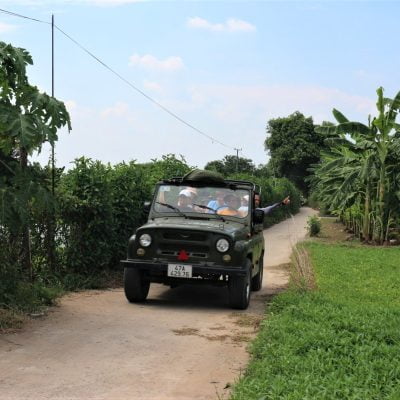
Current Hanoi Jeep tours use open-air Vietnam Army-style Jeeps with retractable roofs, allowing travelers to experience the city while adapting to changing weather conditions.
The Jeep itself also becomes part of the adventure.
Leave the Main Roads Behind
One of the most enjoyable moments on a Jeep Tour is when the vehicle leaves the busy boulevard and turns into a much narrower street.
Suddenly, the atmosphere changes.
Traffic becomes slower. Buildings become closer together. Local shops replace international brands. You begin seeing residential courtyards, small cafés, street kitchens, and people going about their daily routines.
This is when Hanoi starts to feel less like a destination and more like a living city.
Explore Hidden Alleys in the Old Quarter
The Old Quarter is famous, but even experienced travelers can miss many of its smaller lanes.
Behind the main commercial streets are narrow passages where people live, work, eat, and socialize.
Some buildings have existed for generations, while others have been adapted into modern homes, cafés, workshops, and small businesses.
Exploring these streets with a local guide gives you context that you would probably miss if you simply walked through them alone.
Discover Hanoi’s Residential Neighborhoods
Hanoi’s residential neighborhoods are particularly interesting because they reveal the contrast between traditional and modern life.
A narrow lane may contain an old tube house next to a newly renovated property.
A small family business may operate directly underneath a modern apartment.
A traditional food stall may sit only a few meters from a trendy coffee shop.
This mixture is one of the defining characteristics of contemporary Hanoi.
See How Locals Use the Streets
In Hanoi, the street is often an extension of the home.
People sit outside to drink tea, eat meals, talk with neighbors, repair motorcycles, sell food, or simply watch the activity around them.
Children may play in small spaces between houses, while older residents gather at familiar cafés.
These simple activities are an important part of Vietnamese urban culture.
A Jeep Tour gives visitors an opportunity to observe them naturally without turning the experience into a formal cultural performance.
Discover Local Markets
Local markets provide another window into everyday Hanoi.
Instead of markets designed mainly for tourists, neighborhood markets serve the people who actually live nearby.
You can see fresh vegetables, herbs, meat, seafood, household goods, clothing, tools, and countless other products.
The sounds, smells, colors, and conversations create an atmosphere that is difficult to reproduce anywhere else.
Some current Jeep itineraries include local markets and Cho Gioi, giving visitors a glimpse of Hanoi’s more unusual commercial side.
Find Hanoi’s Hidden Food Spots
Some of the best food experiences in Hanoi happen in places that look almost invisible to visitors.
A small sign, a few plastic stools, a steaming pot, and a handful of local customers may be all you see.
Yet that tiny establishment could specialize in Bún Chả, Bánh Cuốn, Phở, Bánh Mì, grilled food, or another local favorite.
A local guide can make these experiences much easier because you do not have to guess which places are worth stopping at.
Discover Small Family Businesses
Hanoi’s hidden streets are full of businesses operated by families.
You may see the same family preparing food every morning, repairing bicycles, selling household goods, making traditional products, or operating a tiny neighborhood café.
These businesses are an important part of the city’s identity.
They also demonstrate how Vietnamese entrepreneurship often works on a very local and personal scale.
Explore the Streets Around Long Bien
Long Bien is one of the best areas for understanding the relationship between Hanoi’s urban center and the Red River.
As you approach the historic bridge, the city begins to open up.
You can see railway infrastructure, residential areas, river landscapes, and agricultural land.
Current Jeep routes include Long Bien Bridge as a major part of their exploration of Hanoi beyond the central tourist districts.
Cross Long Bien Bridge
Crossing Long Bien Bridge is an experience in itself.
The historic structure provides views across the Red River while connecting central Hanoi with areas on the other side of the river.
From an open-air Jeep, you can experience the movement of motorcycles and trains while looking toward the river and surrounding neighborhoods.
It is also an excellent photography location.
Discover Banana Island
One of the biggest surprises for first-time visitors is how quickly Hanoi can change from a dense urban environment into a green landscape.
Banana Island, located near the Red River, is an example.
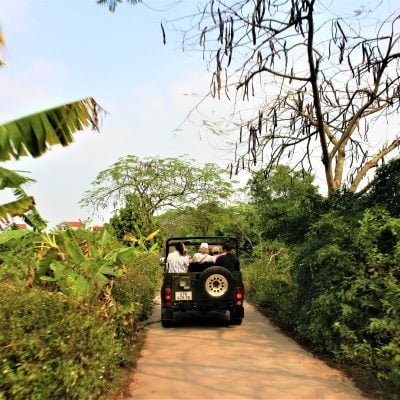
Current Jeep itineraries include Banana Island, where travelers can see gardens, agricultural areas, dirt paths, banana trees, and local life close to central Hanoi.
The contrast is remarkable.
You can leave a busy city street and shortly afterward find yourself surrounded by greenery.
See Hanoi’s Urban Agriculture
The areas around the Red River demonstrate that agriculture still exists close to the heart of Hanoi.
Small gardens and cultivated areas can be found surprisingly close to the city’s dense neighborhoods.
This gives visitors a different understanding of Hanoi’s geography.
The city is not simply a collection of buildings.
It contains rivers, lakes, gardens, farmland, residential communities, historic districts, and modern commercial areas.
Discover Hidden Lakes
Hanoi is often described as a city of lakes, and some of its smaller bodies of water are easy to overlook.
Beyond the famous Hoan Kiem Lake and West Lake, places such as Truc Bach Lake and Huu Tiep Lake offer quieter experiences.
These locations can provide opportunities to see local residents exercising, walking, fishing, drinking coffee, or simply enjoying the surroundings.
Explore Huu Tiep Lake
Huu Tiep Lake is particularly interesting because it combines history with everyday neighborhood life.
The remains of a B-52 aircraft are located in the lake, surrounded by residential streets.
This means that a powerful historical site exists directly within an ordinary community.
It is an excellent example of how Hanoi’s past and present coexist.
Discover the Streets Around West Lake
West Lake is one of Hanoi’s largest and most atmospheric areas.
Although the lake itself is well known, the smaller streets around it are worth exploring.
You can find local restaurants, cafés, residential neighborhoods, temples, small businesses, and quieter waterfront areas.
The atmosphere is particularly pleasant in the late afternoon and evening.
Hidden Hanoi Near Truc Bach Lake
Truc Bach Lake offers another example of a quieter side of central Hanoi.
The streets around the lake have a more relaxed character than the busiest areas of the Old Quarter.
You can see local restaurants, cafés, residential buildings, and traditional architecture while enjoying views across the water.
For photographers, the combination of water, buildings, trees, and street activity provides many opportunities.
Discover Train Street From a Local Perspective
Train Street is famous internationally, but the surrounding neighborhood is still a real residential community.
The railway passes extremely close to houses, cafés, and local businesses.
Current Jeep itineraries include Train Street as part of their Hanoi sightseeing routes.
The important thing is to experience the area responsibly.
Railway access and viewing areas can change, so travelers should follow local regulations and their guide’s instructions and never enter restricted railway areas simply to take photographs.
Hidden Streets Around Ba Dinh
The Ba Dinh area is often associated with major national landmarks, but the surrounding streets also reveal another side of Hanoi.
Behind the monumental buildings are residential areas, cafés, small restaurants, schools, and ordinary city life.
The contrast between the formal government district and the surrounding neighborhoods is fascinating.
It shows how Hanoi’s political, historical, and everyday worlds exist side by side.
Discover Hanoi’s Colonial Architecture
Hidden streets also provide opportunities to discover French colonial architecture that may not appear on a standard sightseeing itinerary.
Old villas, balconies, shutters, tiled roofs, tree-lined streets, and colonial-era façades can appear unexpectedly as you move through central Hanoi.
Some have been beautifully preserved.
Others have been adapted into homes, restaurants, offices, or cafés.
This combination of preservation and adaptation is part of what makes Hanoi’s architecture so distinctive.
Look Beyond Famous Monuments
A common mistake is to assume that authentic Hanoi means avoiding famous attractions.
The opposite is often true.
The best experience combines the major landmarks with the streets around them.
You can visit the Ho Chi Minh Mausoleum area and then explore a nearby residential neighborhood.
You can see the Hanoi Opera House and then travel through smaller French Quarter streets.
You can cross Long Bien Bridge and then enter the agricultural landscape beside the Red River.
The contrast creates a much richer understanding of the city.
A Different Way to Experience Vietnamese Culture
Hidden streets are also where you can observe Vietnamese social habits.
You may notice how people share food, how families organize their homes, how neighbors interact, and how businesses operate from very small spaces.
You can observe the importance of coffee, tea, street food, family businesses, markets, and neighborhood relationships.
None of these things require a formal presentation.
They are simply part of everyday Hanoi.
Why a Local Woman Guide Can Make a Difference
A local woman guide can provide personal insights into Hanoi’s neighborhoods, food, family life, traditions, and changes over time.
A women-led Jeep Tour is not necessarily a women-only experience. Couples, families, friends, and mixed groups can all join.
The important difference is that the tour is led by local women who can share their perspective on the city.
For travelers interested in personal storytelling and cultural interaction, this can make the experience feel more intimate.
Hidden Streets Are Especially Good for Photography
If you enjoy photography, the smaller streets of Hanoi can be more rewarding than the most famous landmarks.
You can photograph old façades, street vendors, bicycles, food preparation, market scenes, balconies, narrow lanes, local cafés, temples, and everyday interactions.
Because the Jeep keeps moving between neighborhoods, you also get constantly changing subjects.
Morning light works particularly well for markets and street scenes, while late afternoon provides softer light for architecture and landscapes.
Hanoi Hidden Streets at Night
The hidden streets become completely different after sunset.
Small restaurants begin filling with customers.
Food stalls appear on sidewalks.
Homes turn on their lights.
Cafés become gathering places.
Motorbikes create streams of headlights through the narrow lanes.
An evening Jeep Tour allows you to see this transformation while combining local food with nighttime sightseeing.
Why Hidden Streets Are Better Than a Standard Bus Route
A large sightseeing bus is useful for major attractions, but it cannot provide the same access to smaller neighborhoods.
A Jeep can travel through narrower streets and stop closer to local communities.
More importantly, the open-air format keeps you connected with the environment.
You hear conversations, smell food, see street activity, and feel the changing atmosphere as you move from one neighborhood to another.
Private Jeep Tour for Hidden Hanoi
A private Jeep Tour is particularly useful if discovering hidden streets is your main objective.
Your guide can spend more time explaining interesting places and adjust the pace according to your interests.
If you see an unusual market, an interesting building, or a great photography opportunity, a private itinerary can provide greater flexibility.
This is especially useful for photographers, families, couples, and travelers who have already visited Hanoi’s main attractions.
How Long Should You Spend Exploring Hidden Hanoi?
A 4–4.5-hour Jeep Tour provides enough time to combine central Hanoi with several less-touristy areas.
A shorter experience can focus on the Old Quarter, French Quarter, Long Bien Bridge, and nearby neighborhoods.
A longer or full-day itinerary can extend farther toward countryside areas and provide a deeper look at life along the Red River.
The ideal duration depends on whether hidden streets are your main focus or one part of a broader Hanoi experience.
What to Expect During the Ride
You are a passenger throughout the experience.
An experienced driver operates the Jeep while a local guide explains the surroundings.
The vehicle is open-air, although the retractable roof can be used when necessary. Current tour information also states that rain protection is provided and tours operate in different weather conditions.
There will be short stops during the journey, so comfortable clothing and shoes are recommended.
Is This Tour Suitable for First-Time Visitors?
Yes, especially if you want to understand Hanoi beyond the postcard attractions.
First-time visitors can see the major highlights while also discovering the neighborhoods between them.
This provides a useful introduction to the geography of Hanoi.
You begin to understand how the Old Quarter connects with the French Quarter, how the city reaches the Red River, where West Lake sits, and how residential areas surround the major landmarks.
Is It Good for Returning Visitors?
For returning travelers, hidden-street exploration can be even more valuable.
If you have already visited Hoan Kiem Lake, the Temple of Literature, the Ho Chi Minh Mausoleum, and other major attractions, you can use your next Jeep Tour to explore the parts of Hanoi you missed.
This might include local markets, Banana Island, smaller residential lanes, neighborhood cafés, hidden food spots, or riverside communities.
Final Thoughts
A Hanoi Jeep Tour: Discover Hanoi’s Hidden Streets offers a different interpretation of sightseeing.
Instead of asking only, “What famous places should I see?” the experience asks a more interesting question:
“How do people actually live in Hanoi?”
The answer can be found in narrow alleys, family businesses, local markets, food stalls, residential neighborhoods, lakeside streets, riverside farms, hidden cafés, and communities that exist just beyond the main tourist routes.
You can cross historic Long Bien Bridge, explore Banana Island, pass through local neighborhoods, discover hidden markets, experience Train Street, travel around West Lake, photograph colonial architecture, taste Vietnamese food, and observe everyday life along the way.
The famous Hanoi is worth seeing.
But the hidden Hanoi is worth discovering.
Get off the main tourist route, open your eyes to the small details, and let the city’s hidden streets show you a more authentic side of Vietnam’s capital.
Book Your Hanoi Hidden Streets Jeep Tour
Hanoi Jeep Tours – Led by Women
Address: 91 Tho Nhuom Street, Hoan Kiem District, Hanoi, Vietnam
WhatsApp: +84 982 416 518 / +84 981 090 989
Email: toursjeephanoi@gmail.com
Official Website: Hanoi Jeep Tours – Official Website
Discover hidden Hanoi by open-air Jeep, explore local neighborhoods, meet local people, taste Vietnamese food, and experience the city beyond the usual tourist trail.