Hanoi Vespa Photography Experience: Capture the Real Hanoi
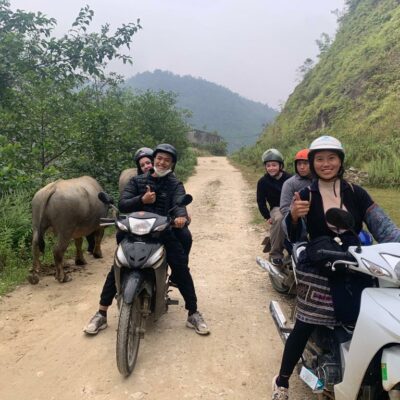
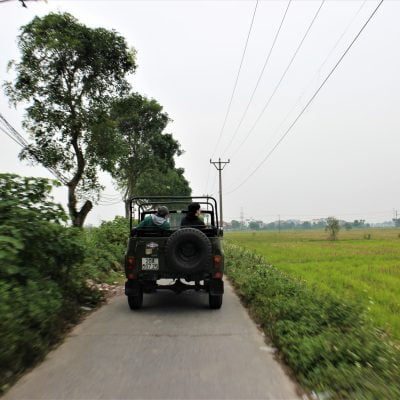
A Hanoi Vespa Photography Experience is for travelers who want to photograph more than Hanoi’s famous landmarks. The city becomes your moving photography studio: narrow Old Quarter alleys, street vendors, French colonial buildings, markets, Long Bien Bridge, the Red River, Banana Island, West Lake, railway neighborhoods and everyday street scenes can all become part of your visual story. Traveling by Vespa makes it possible to move between very different environments quickly while staying close enough to capture the details that make Hanoi distinctive. The published Hanoi Vespa route includes hidden backstreets, markets, historic landmarks, Long Bien Bridge, Banana Island, West Lake, Train Street, Vietnamese food and egg coffee.
Why Explore Hanoi by Vespa for Photography?
Hanoi is difficult to photograph properly if you only move between major attractions by car. Some of the city’s most interesting images appear in the streets between those attractions: a vendor arranging flowers, a steaming food stall, an old doorway, a bicycle loaded with produce, a narrow alley filled with laundry or a quiet residential lane suddenly opening onto a busy market.
A Vespa allows you to move through these changing environments while keeping the journey flexible and visually varied.
Capture the Real Hanoi, Not Just the Postcard Hanoi
The most recognizable Hanoi photographs often feature Hoan Kiem Lake, the Old Quarter or Train Street. They are worth photographing, but they represent only one part of the city.
A photography-focused Vespa journey can take you beyond those obvious scenes into neighborhoods where daily life becomes the subject. The published Motorbike City Tours itinerary specifically combines major landmarks with hidden alleys, markets, agricultural areas and residential streets.
Start With the Old Quarter
The Old Quarter is a natural starting point for street photography. Its narrow lanes create layers of activity: storefronts, motorbikes, pedestrians, food stalls, balconies and old buildings all competing for attention.
From a Vespa, you can observe the streets from a lower and more immediate perspective than you would from inside a car.
Photograph Hanoi’s Narrow Alleys
Some of the most interesting photographs are found away from the main roads.
Hanoi’s smaller alleys can reveal old houses, tiny cafés, family businesses and ordinary routines. The published Vespa itinerary begins by moving through the city’s maze-like alleyways and hidden backstreets.
These areas are ideal for candid street photography because they show Hanoi as a living neighborhood rather than a collection of monuments.
Photograph Street Vendors
Street vendors are part of Hanoi’s visual identity. Baskets of fruit, flowers, vegetables and prepared food create constantly changing compositions.
Early morning can be especially interesting because markets and vendors are active while the streets are not yet as crowded as later in the day.
If you photograph people, remember that respectful interaction matters. When you want a close portrait rather than a candid street image, asking permission is the better approach.
Look for Layers
Hanoi rewards photographers who look for multiple layers within a single frame.
An old building might sit behind a modern scooter. A food vendor might work beneath a French colonial façade. A traditional market might be surrounded by contemporary businesses.
These contrasts tell the story of a city where different periods of history continue to exist side by side.
Photograph French Colonial Architecture
The French Quarter provides a completely different photographic environment from the Old Quarter.
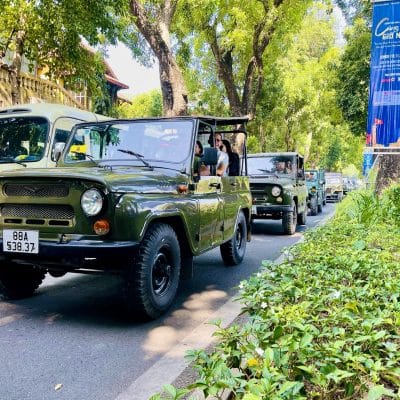
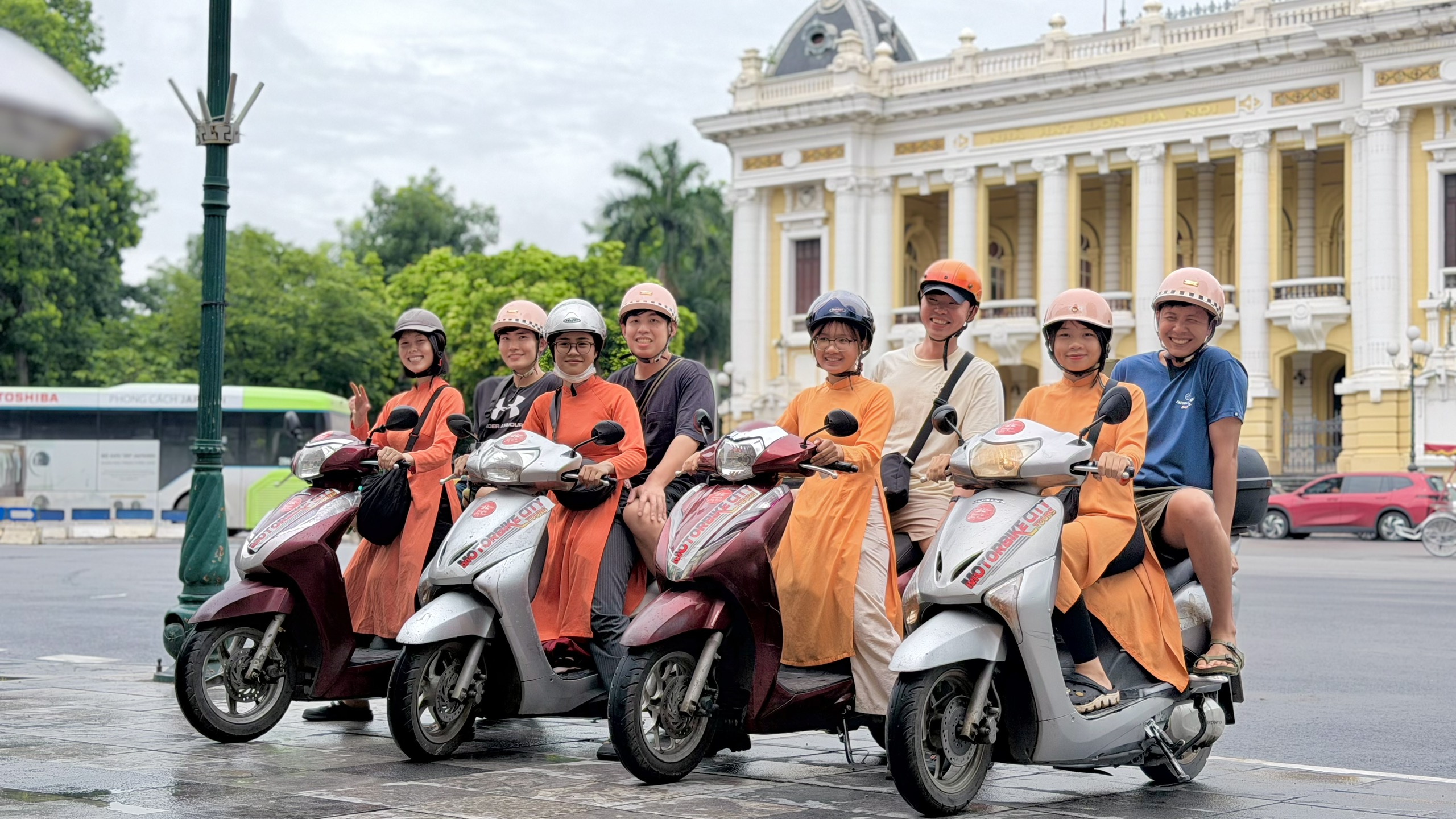
Wider boulevards, mature trees, colonial façades and landmarks such as the Hanoi Opera House create opportunities for architectural photography and wider compositions.
The published Vespa itinerary includes the French Quarter and Hanoi Opera House among its historic locations.
Capture Huu Tiep Lake and the B-52 Wreckage
Huu Tiep Lake is an unusual photography location because history and everyday residential life appear in the same frame.
The remains of a B-52 bomber are visible in the lake, while homes and ordinary neighborhood activity surround it. The location is included in the published Vespa route.
It provides opportunities for documentary-style photographs rather than conventional landmark images.
Photograph Long Bien Bridge
Long Bien Bridge is one of the most visually distinctive locations on the route.
The historic structure, railway, Red River and surrounding landscape create opportunities for wide-angle photographs, architectural details and environmental portraits.
The Vespa allows you to experience the bridge as part of a larger journey rather than simply arriving for a short photo stop.
Capture the Red River Landscape
After leaving the dense city center, the landscape around the Red River becomes much more open.
This change provides a useful break from street photography. You can switch from close details and portraits to wide landscapes showing the river, bridge, cultivated land and surrounding city.
Photograph Banana Island
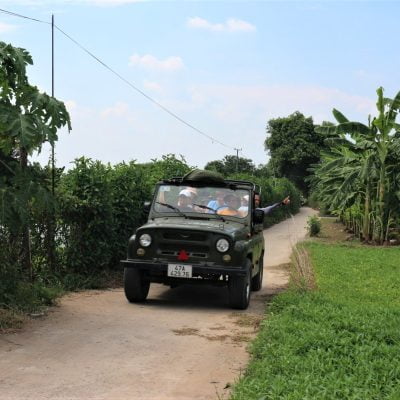
Banana Island is perhaps one of the most unexpected photography locations near central Hanoi. The area contains agricultural land, gardens, banana trees and quieter paths.
The published Motorbike City Tours itinerary includes Banana Island after crossing Long Bien Bridge.
For photographers, this section provides an entirely different visual vocabulary from the dense Old Quarter.
Capture Hanoi’s Agricultural Side
The agricultural landscape demonstrates that Hanoi is not simply a city of concrete and traffic.
Banana and guava trees, cultivated fields, narrow dirt paths and people working around the land create opportunities for environmental photography.
It is also an excellent location for showing contrast: the modern capital can sometimes be visible in the distance while agricultural life continues nearby.
Photograph West Lake
West Lake provides wide views, reflections, tree-lined streets and changing urban landscapes.
It is particularly useful for photographers who want to move away from tight street compositions and experiment with wider scenes.
The published Vespa route includes West Lake as part of the city journey.
Photograph Hanoi at Different Times of Day
Light changes the character of Hanoi dramatically.
Morning can provide softer light, active markets and cooler streets.
Midday produces stronger contrast and sharper shadows.
Afternoon can create warmer tones and longer shadows, particularly toward the later part of the tour.
The published Vespa experience offers morning and afternoon departures, giving photographers a choice of atmosphere.
Morning Photography: Street Life
Morning is particularly interesting for photographers interested in everyday routines.
Markets become active, food vendors prepare breakfast, residents begin work and Hanoi gradually becomes busier.
If your photography focuses on documentary scenes and street activity, an early departure can be especially rewarding.
Afternoon Photography: Warmer Light
An afternoon ride provides a different atmosphere. The city has fully entered its daily rhythm, while later light can add warmth to buildings, streets and people.
It can be a good option for photographers who prefer more dramatic light and busier street scenes.
Train Street Through a Photographer’s Lens
Train Street is one of Hanoi’s most recognizable photographic environments, but it should be treated carefully.
The attraction is not simply the railway. It is the relationship between the tracks, narrow homes, cafés, architecture and the people who live around the railway.
Access and safety conditions can change, so travelers should always follow their guide’s instructions and current local restrictions.
Photograph Everyday Details
A photography experience does not need to be about spectacular views.
Look for:
- Hands preparing food
- Old doors and windows
- Market baskets
- Street signs
- Coffee glasses
- Flower sellers
- Motorbikes
- Architectural details
- Reflections in puddles
- Shadows across alleyways
- Bicycles carrying produce
- People sitting outside cafés
These small details often create the strongest visual memory of Hanoi.
Use the Vespa as Part of the Composition
The Vespa itself can become a photographic subject.
A classic scooter parked beside an old Hanoi building creates an interesting contrast between transportation, architecture and history. A photograph of the scooter crossing Long Bien Bridge can also establish a strong sense of place.
Rather than photographing only what you see from the Vespa, occasionally include the Vespa in the frame.
Shoot From the Passenger Seat
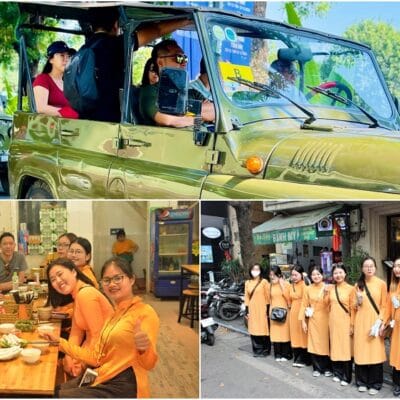
The passenger position provides an unusual viewpoint. You are moving through the city at street level without having to concentrate on driving.
This makes it easier to observe potential photographs as they appear and communicate with the guide when you want to stop.
Never attempt to photograph recklessly while the scooter is moving. For important shots, ask the driver to stop safely.
A Female-Led Photography Experience
The published Motorbike City Tours experience is Led by Women, with professional licensed female drivers and English-speaking guides.
For photography travelers, this can be valuable because the guide is not simply navigating between attractions. She can help explain the context behind what you are photographing and identify interesting streets, neighborhoods and cultural details.
Local Knowledge Helps Photographers
A photographer can have the best camera in the world and still miss the best image if they do not know where to look.
A knowledgeable guide can point out an interesting market, a particular architectural detail, a quieter street or a neighborhood that changes dramatically at a certain time of day.
The published experience is specifically designed around hidden streets, markets, historic locations and everyday Hanoi rather than only major attractions.
You Don’t Need Professional Photography Skills
This experience is not only for professional photographers.
A smartphone can be enough to create excellent Hanoi photographs. The important thing is learning to notice light, composition, people, movement and contrast.
If you enjoy taking travel photographs for your personal album, Instagram, a travel blog or simply your own memories, the route provides plenty of material.
What Camera Should You Bring?
You can use whatever camera you are comfortable carrying.
Smartphone
A modern smartphone is ideal for travelers who want to stay lightweight. It is quick to use and discreet for street photography.
Mirrorless Camera
A compact mirrorless camera provides more control over exposure, lenses and depth of field without the bulk of a professional DSLR setup.
DSLR
A DSLR can produce excellent results, but consider whether you really want to carry a larger camera and lens while riding around Hanoi.
For most travelers, a lightweight setup is more practical.
Bring One Versatile Lens
If you use a dedicated camera, a versatile zoom or standard prime lens can be more useful than carrying an entire collection.
You may move rapidly between architecture, people, food and landscapes, so flexibility is valuable.
Protect Your Camera
Hanoi can be hot, humid or rainy depending on the season. Keep your camera protected when moving between locations and use a small waterproof bag or cover if rain is possible.
The published Vespa tour provides raincoats, but your camera still needs its own protection.
Photography and Food Together
Food is another major photographic opportunity.
The published Vespa experience includes a traditional Vietnamese meal and Hanoi egg coffee.
Instead of photographing food only inside a restaurant, you can also photograph ingredients, preparation, street stalls and the environments where Hanoi’s food culture takes place.
Photograph Hanoi Egg Coffee
Egg coffee is visually distinctive as well as delicious.
The contrast between dark coffee and the creamy topping creates an obvious close-up subject, while the café environment can provide additional storytelling images.
Take a photograph before drinking it—but don’t spend so long arranging the shot that you forget to enjoy it.
Capture Bia Hoi Culture
Bia Hoi provides opportunities for environmental photography, particularly if you enjoy documenting social scenes.
Simple plastic stools, glasses of beer, street-side food and conversations can create a much more intimate image of Hanoi than a photograph of a famous building.
The published itinerary includes Bia Hoi as part of the wider experience.
Photography Stops Should Not Feel Rushed
One advantage of a private or small-group experience is the ability to communicate about photography.
If you see an interesting scene, you can tell the guide. With a private tour, there can be more flexibility around where you stop and how much time you spend photographing.
Motorbike City Tours offers private and small-group options for its Vespa experience.
Photography for Couples
Couples can create a visual travel story together: riding through the Old Quarter, crossing Long Bien Bridge, exploring Banana Island and stopping for Vietnamese food and coffee.
A private tour also gives couples more flexibility to stop for photographs without worrying about a large group.
Photography for Solo Travelers
Solo photographers can benefit from a small-group experience because they have a driver and guide handling the journey while they concentrate on photography.
A private tour is another option for travelers with very specific photographic interests.
Photography for Content Creators
For bloggers, Instagram creators and travel videographers, a Vespa route can produce a wide range of footage in a relatively short time.
You can capture:
- Moving street scenes
- Architecture
- Food
- People
- Markets
- Rural landscapes
- Traffic
- Lakes
- Bridges
- Behind-the-scenes travel footage
The key is to build a visual story rather than simply collecting isolated images.
What Should You Wear?
Comfortable clothing is best because you will spend several hours outdoors.
Consider:
- Comfortable trousers or shorts
- Lightweight clothing
- Comfortable shoes
- Sunglasses
- Sunscreen
- Light jacket in cooler weather
- Small crossbody or camera bag
The published tour includes helmets and raincoats.
Keep Your Camera Accessible
A camera buried at the bottom of a backpack is unlikely to capture spontaneous street moments.
Keep your phone or camera safely accessible while riding, but secure it before moving through traffic.
When you spot something worth photographing, communicate with your driver and stop in a safe location.
Morning or Afternoon?
The published tour operates from 8:00 AM to 12:45 PM in the morning and 1:00 PM to 5:30 PM in the afternoon, with a total duration of approximately 4.5 hours.
For photography, choose based on the kind of images you want.
Morning: markets, fresh activity and softer early light.
Afternoon: busier streets, warmer light and later-day atmosphere.
Hotel Pickup Makes Photography Easier
Central Hanoi hotel pickup and drop-off are included in the published experience.
This is useful when carrying photography equipment because you can leave your hotel with your camera already prepared rather than navigating unfamiliar streets to a meeting point.
What Makes This a “Real Hanoi” Photography Experience?
The difference is variety.
You are not photographing only Hanoi’s famous landmarks. You can photograph the people, streets, food, architecture, landscapes and contrasts that make the capital distinctive.
One frame might show a French colonial building. The next might capture a market vendor. A few minutes later, you could be photographing the Red River from Long Bien Bridge.
That range gives your photography a stronger sense of place.
A Suggested Photography Mindset
Instead of asking, “What famous place should I photograph?”, ask:
What is happening here?
Look for movement, relationships, colors, textures and contrasts. Photograph the street as a story rather than treating every stop as a postcard.
This approach usually produces a much more personal collection of Hanoi images.
Book a Hanoi Vespa Photography Experience
A Hanoi Vespa Photography Experience is ideal for travelers who want to capture the capital beyond its standard postcard images. Ride through hidden alleys, photograph markets and French architecture, cross Long Bien Bridge, explore the agricultural landscape of Banana Island, capture West Lake and discover Train Street while enjoying Vietnamese food and Hanoi egg coffee. With professional female drivers, comfortable scooters, an English-speaking guide, helmets, raincoats and central Hanoi hotel pickup, you can concentrate on the camera while someone else handles the road.
MOTORBIKE CITY TOURS – HANOI VESPA TOURS LED BY WOMEN
Address: 91 Tho Nhuom Street, Hoan Kiem District, Hanoi, Vietnam
Phone / WhatsApp / iMessage: +84 988 402 008
Email: info@motorbikecitytours.com
Website: motorbikecitytours.com
Tour: Hanoi Vespa Tour – Tour Code MCT3
Duration: 4.5 hours
Morning: 8:00 AM–12:45 PM
Afternoon: 1:00 PM–5:30 PM
Pickup: Central Hanoi hotel or requested central Hanoi location
Contact Motorbike City Tours to arrange a private or small-group Hanoi Vespa Tour Led by Women and capture Hanoi through your own lens.