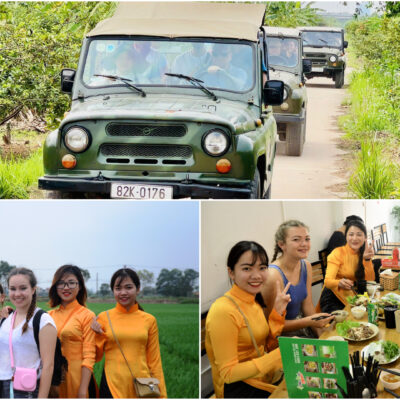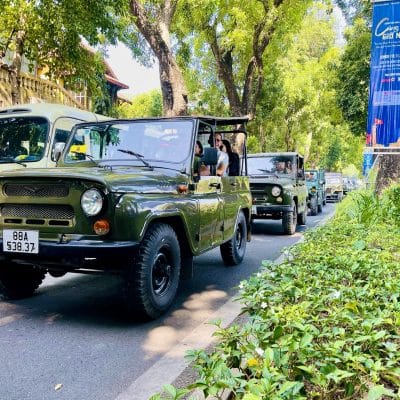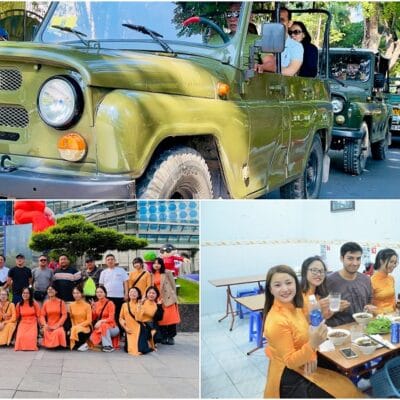
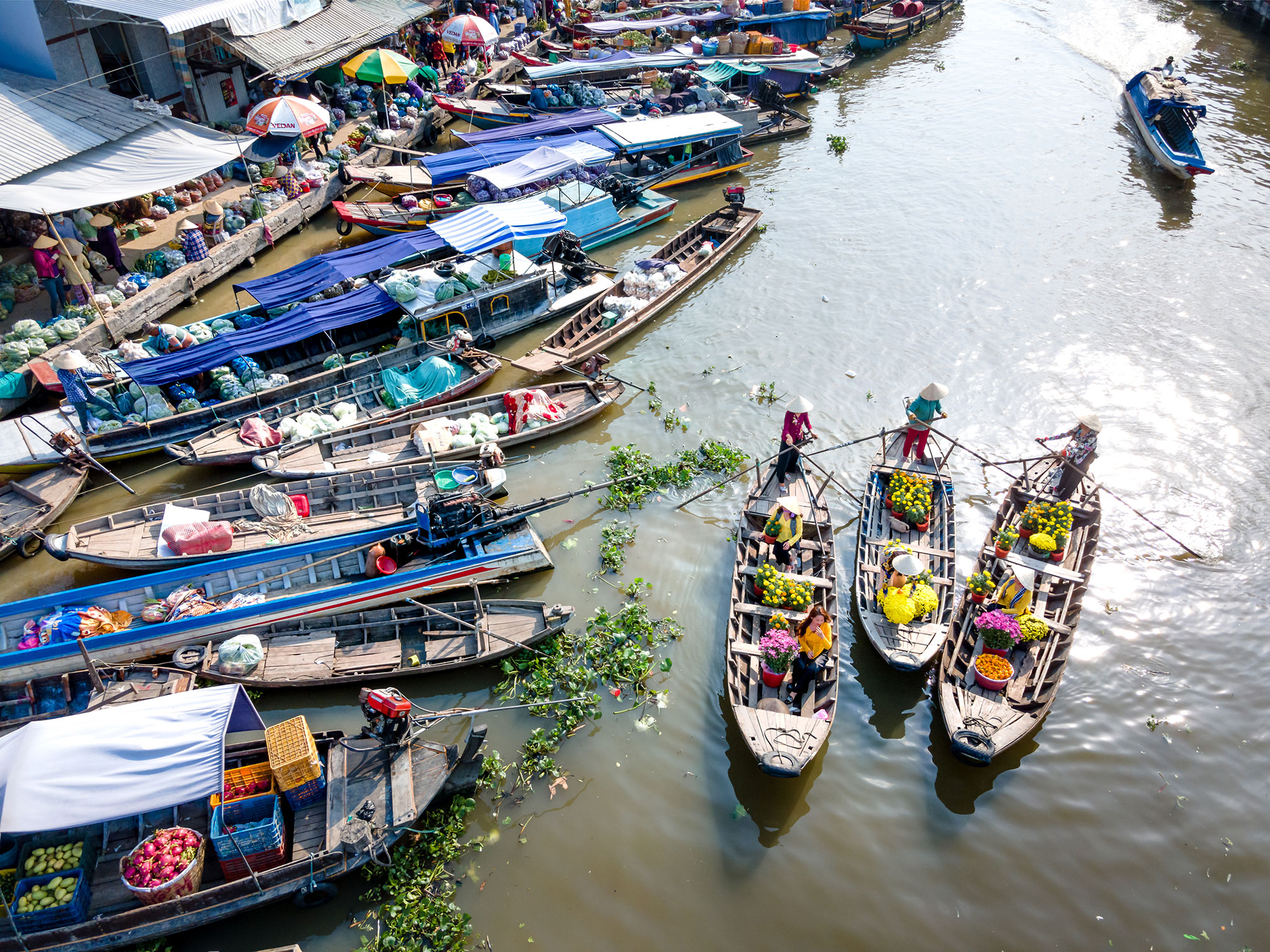
Best Places to Visit in Southern Vietnam
Southern Vietnam is a region of contrasts. Ho Chi Minh City delivers fast-moving streets, historic landmarks, cafés, markets and some of Vietnam’s best urban food. Just beyond the city, the Mekong Delta becomes a world of rivers, canals, fruit orchards, floating markets and quiet villages. Farther south and offshore, Phu Quoc and Con Dao offer beaches, forests and island experiences, while Mui Ne combines beaches with spectacular sand dunes.
For travelers who have already explored Hanoi, Sapa, Ha Giang, Hue, Da Nang and Hoi An, Southern Vietnam offers an entirely different atmosphere. The landscape is flatter and more tropical, the cuisine has its own character, and life in many rural areas revolves around waterways and agriculture.
The official regional destination guide highlights Ho Chi Minh City, Can Tho, Chau Doc, Phu Quoc, Con Dao and Binh Thuan among Southern Vietnam’s principal destinations. It describes the region as a combination of energetic urban life, mellow countryside and island escapes.
For first-time visitors, the most practical route is Ho Chi Minh City → Mekong Delta → Phu Quoc. With more time, you can add Con Dao, Mui Ne, Ben Tre, Chau Doc, Vinh Long, Tay Ninh or Ca Mau.
Southern Vietnam at a Glance
| Destination | Best For | Recommended Stay |
|---|---|---|
| Ho Chi Minh City | History, food, nightlife, shopping | 2–3 days |
| Cu Chi | War history, tunnels | Half day |
| Tay Ninh | Cao Dai religion, Ba Den Mountain | 1 day |
| Ben Tre | Coconut waterways, countryside | 1–2 days |
| My Tho | Easy Mekong introduction | Half–1 day |
| Can Tho | Floating markets, river life | 1–2 days |
| Vinh Long | Islets, orchards, homestays | 1–2 days |
| Chau Doc | Temples, border culture, Tra Su | 1–2 days |
| Ca Mau | Southernmost Vietnam, wetlands | 1–2 days |
| Mui Ne | Sand dunes, beach, kitesurfing | 2–3 days |
| Phu Quoc | Beaches, islands, seafood | 3–4 days |
| Con Dao | Quiet beaches, nature, history | 2–3 days |
| Vung Tau | Easy coastal escape | 1–2 days |
| Soc Trang | Khmer temples, local culture | 1 day |
| Bac Lieu | Southern Delta culture | 1 day |
1. Ho Chi Minh City – Best for First-Time Visitors
Ho Chi Minh City is the natural starting point for most Southern Vietnam trips.
Formerly known as Saigon, it is the economic heart of southern Vietnam and the region’s main transportation hub. The city combines French-colonial buildings, modern skyscrapers, markets, temples, street food and an enormous café culture within a relatively compact urban area.
The best way to experience the city is to combine famous landmarks with ordinary neighborhoods.
Best Things to See in Ho Chi Minh City
Prioritize:
Reunification Palace
War Remnants Museum
Central Post Office
Notre Dame Cathedral area
Ben Thanh Market
Nguyen Hue Walking Street
Jade Emperor Pagoda
Cholon
Binh Tay Market
Thien Hau Pagoda
The official city guide specifically highlights the Central Post Office, Notre Dame Cathedral area, Opera House, Ben Thanh Market, Jade Emperor Pagoda and Cholon among the city’s key experiences.
Ho Chi Minh City for Food Lovers
The city is one of the best places in Vietnam for street food.
Try:
Com tam
Banh mi
Banh xeo
Hu tieu
Bun thit nuong
Oc
Vietnamese coffee
A local evening food tour by motorbike is particularly useful because many excellent food areas lie well beyond the main tourist streets.
2. Cu Chi Tunnels – Best for War History
The Cu Chi Tunnels are one of the most popular historical excursions from Ho Chi Minh City.
The underground network was developed and used by Viet Cong forces and included living areas, kitchens, storage spaces, meeting rooms and fighting positions.
A visit helps explain how underground warfare functioned and how rural communities were affected by the conflict.
Allow roughly half a day.
For travelers interested in history, Cu Chi works particularly well when combined with the War Remnants Museum in Ho Chi Minh City.
3. Cholon – Best for Chinese-Vietnamese Culture
Cholon, historically known as Saigon’s Chinatown, is one of the most culturally distinctive areas of Ho Chi Minh City.
Explore:
Binh Tay Market
Thien Hau Pagoda
Chinese assembly halls
Traditional medicine shops
Local food streets
The neighborhood offers a different perspective on the city’s history and is particularly interesting for travelers who have already explored District 1.
4. Tay Ninh – Best for Cao Dai Culture
Tay Ninh is one of Southern Vietnam’s most interesting day-trip destinations.
The province is home to the Cao Dai Holy See, the spiritual center of Cao Dai, a Vietnamese religion founded in the early 20th century.
The colorful architecture is striking, while the daily ceremonies offer an opportunity to learn about a distinctly Vietnamese religious tradition.
Tay Ninh can also be combined with Ba Den Mountain, the highest mountain in Southern Vietnam.
5. Ba Den Mountain – Best for Mountain Views
Ba Den Mountain rises dramatically from the surrounding plains of Tay Ninh.
The site has become a major destination for both pilgrimage and sightseeing, with temples and cable-car systems providing access to higher areas.
It offers an unusual contrast to the otherwise flat landscape of Southern Vietnam.
For travelers who want a mountain experience without traveling to Northern Vietnam, Ba Den is one of the strongest choices.
6. My Tho – Best Easy Introduction to the Mekong Delta
My Tho is one of the easiest places to experience the Mekong Delta from Ho Chi Minh City.
It is close enough for a day trip and offers boat rides, small canals, fruit gardens and rural islands.
A typical excursion combines My Tho with nearby Ben Tre.
This is a convenient option for travelers with only one free day, although those with more time should travel deeper into the Delta.
7. Ben Tre – Best for Coconut Waterways
Ben Tre is one of the most attractive Delta destinations for travelers who want a slower countryside experience.
The province is famous for coconut palms, small canals, fruit orchards and rural villages.
Instead of large tourist boats, choose a smaller private boat when possible.
A typical day can include:
Boat ride
Coconut groves
Fruit garden
Local workshop
Cycling
Village lunch
Ben Tre is particularly suitable for couples, families and travelers who prefer quieter rural landscapes.
8. Can Tho – Best Base for the Mekong Delta
Can Tho is the most practical base for a deeper Mekong Delta experience.
The city combines riverfront life with nearby orchards, canals, islets, historic houses and food markets.
Official destination information describes Can Tho as a river-delta city where visitors can explore floating markets, orchards, ancient houses, temples, boat routes and local cuisine.
Staying overnight is strongly recommended because the most famous experiences happen early in the morning.
9. Cai Rang Floating Market – Best Mekong Experience
Cai Rang Floating Market is one of the defining experiences of Southern Vietnam.
Boats gather on the river carrying fruit, vegetables, noodles, coffee and other goods.
The market is most active early in the morning. Official tourism guidance recommends starting the boat trip around 5:00–6:00 AM to experience the market at its liveliest.
For photographers and first-time visitors, this is one of the places where waking before sunrise is absolutely worth it.
10. Vinh Long – Best for Mekong Countryside
Vinh Long is another excellent choice for travelers who want to explore the Delta beyond the main Can Tho route.
The province is surrounded by waterways, orchards and small islands.
One of the most interesting areas is An Binh Island, where visitors can cycle through villages, visit family-run gardens and stay in homestays.
Vinh Long is particularly good for travelers who want a quieter Delta experience with fewer large tourist groups.
11. Ben Binh Island and Mekong Homestays
A night in a Mekong Delta homestay can be more rewarding than a full day of sightseeing.
Stay with a local family, eat dinner together, wake up early and explore nearby waterways before breakfast.
The experience is less about luxury and more about observing the agricultural rhythm of Southern Vietnam.
12. Chau Doc – Best for Deeper Mekong Culture
Chau Doc, close to the Cambodian border, is one of the most culturally diverse cities in the Mekong Delta.
The area has strong Vietnamese, Khmer, Cham and Chinese influences.
Highlights include:
Sam Mountain
Ba Chua Xu Temple
Tra Su Cajuput Forest
Floating villages
Chau Doc floating fish farms
It works particularly well as part of a two- or three-day Delta itinerary.
13. Tra Su Cajuput Forest – Best for Nature
Tra Su Cajuput Forest offers one of the most beautiful nature experiences in the Mekong Delta.
Small boats move through narrow waterways surrounded by cajuput trees and floating vegetation.
The quiet landscape is a sharp contrast with Ho Chi Minh City’s traffic and Can Tho’s busy riverfront.
It is particularly good for photographers and bird-watchers.
14. Sam Mountain – Best for Spiritual Landscapes
Sam Mountain rises from the relatively flat landscape around Chau Doc.
The slopes contain temples, pagodas and shrines, while higher viewpoints provide broad views toward the surrounding rice fields and border region.
It can be combined with Tra Su in a full day.
15. Soc Trang – Best for Khmer Culture
Soc Trang is one of the best places in Southern Vietnam to explore Khmer cultural heritage.
The province contains distinctive Khmer Buddhist temples with colorful architecture and elaborate decorative details.
Travelers interested in religion, architecture and the diversity of southern communities should consider spending a day here.
The Doi Pagoda and Khmer temples around Soc Trang are among the area’s highlights.
16. Bac Lieu – Best for Southern Delta Heritage
Bac Lieu offers another glimpse into the history of the Mekong Delta.
The city is associated with old merchant families, Southern Vietnamese music traditions and Khmer cultural influences.
Its combination of colonial-era architecture, temples and rural landscapes makes it an interesting stop for travelers going farther south.
17. Ca Mau – Best for Vietnam’s Southernmost Point
Ca Mau is the southernmost province of mainland Vietnam and offers a very different experience from Ho Chi Minh City or Phu Quoc.
The key attraction is Mui Ca Mau, where mangrove forests, mudflats and waterways meet the sea.
A visit here is more about geography and ecosystems than traditional sightseeing.
For travelers who want to say they reached the southernmost end of mainland Vietnam, Ca Mau is the natural choice.
18. Mui Ca Mau National Park – Best for Mangrove Landscapes
The Mui Ca Mau area contains important mangrove ecosystems and wetlands.
Boat trips are the best way to understand the landscape.
The environment is particularly interesting for travelers interested in ecology, coastal protection and birdlife.
This is one of the places where Southern Vietnam’s relationship with water becomes especially obvious.
19. Mui Ne – Best for Sand Dunes
Mui Ne, in the Binh Thuan area, is one of Southern Vietnam’s best-known coastal destinations.
The landscape is unusual because tropical beaches meet large red and white sand dunes.
Official regional tourism information identifies Binh Thuan and Mui Ne as major southern destinations, particularly for beaches and kiteboarding.
White Sand Dunes
The White Sand Dunes are the most dramatic.
Visit around sunrise for cooler temperatures, softer light and better photography.
You can walk across the dunes or experience permitted recreational activities.
Red Sand Dunes
The Red Sand Dunes are smaller but extremely accessible from Mui Ne.
They are particularly attractive around sunset.
20. Mui Ne for Kitesurfing
Mui Ne has a strong reputation for kitesurfing and other wind-based water sports.
The consistent coastal winds have made it an important destination for international watersports travelers.
Beginners can take lessons, while experienced riders can use the beach as a base for longer stays.
21. Mui Ne Fishing Village
The Mui Ne fishing village offers a glimpse into the local coastal economy.
Early morning is the best time to see boats returning with seafood and local traders sorting their catch.
It provides an excellent contrast with the resort areas.
22. Fairy Stream
The Fairy Stream is a shallow natural stream running through a landscape of red and orange sand formations.
The walk is relatively easy and can be combined with the fishing village and Red Sand Dunes.
Visit early or late in the day to avoid the strongest heat.
23. Phu Quoc – Best Overall Island Destination
Phu Quoc is the best-known island destination in Southern Vietnam and one of the easiest places to combine beach relaxation with local culture.
The island has around 150 kilometers of coastline, while more than half of its land area has been protected within a UNESCO Biosphere Reserve since 2006.
Phu Quoc is famous for:
Long beaches
Turquoise water
Seafood
Fish sauce
Black pepper
Tropical forests
Sunsets
Island excursions
Long Beach
Long Beach is the easiest place for first-time visitors.
The coastline extends for roughly 20 kilometers, providing plenty of resort and restaurant options and excellent sunset views.
Sao Beach
Sao Beach is famous for white sand and turquoise water.
It is one of the island’s most photographed beaches and works well as a half-day excursion.
Ganh Dau
Ganh Dau offers a quieter northern coastal experience.
Official island information highlights Ganh Dau and Bai Thom among northern beaches where travelers can find a less-developed atmosphere.
24. Phu Quoc National Park – Best for Forest and Wildlife
The northern part of Phu Quoc contains extensive forest areas and hiking opportunities.
Short walks can introduce visitors to tropical vegetation, streams and wildlife.
Longer treks should be planned with suitable local guidance, especially during wet weather.
The island’s national-park landscape is an excellent reminder that Phu Quoc is much more than a resort destination.
25. An Thoi Archipelago – Best for Island Hopping
The An Thoi Archipelago in southern Phu Quoc is one of the best areas for snorkeling, boat trips and island exploration.
A typical excursion may include:
Boat ride
Snorkeling
Swimming
Small islands
Seafood lunch
Fishing
Sunset
The area is particularly attractive for travelers who want to spend a full day on the water.
26. Ham Ninh Fishing Village – Best for Seafood
Ham Ninh is associated with fishing and seafood, making it a good place to experience local island cuisine.
Fresh crab and shellfish are particularly popular.
Visit in the early morning or late afternoon for a more interesting atmosphere.
27. Phu Quoc Fish Sauce and Pepper Farms
Phu Quoc’s identity is closely tied to two products: fish sauce and black pepper.
A visit to a fish-sauce producer or pepper farm provides a useful cultural dimension to a beach holiday.
Official island information specifically recommends learning about these traditional products as part of understanding Phu Quoc’s local economy.
28. Con Dao – Best for Quiet Beaches and Nature
Con Dao is one of the best choices for travelers who want a more secluded island experience than Phu Quoc.
The archipelago combines beaches, forest, coral reefs and significant historical sites.
Current official tourism material describes Con Dao as a relatively untouched marine destination with protected ecosystems, clear waters and strong nature-based tourism potential.
Con Dao Beaches
Con Dao has several beautiful beaches, including:
Dam Trau
An Hai
Lo Voi
The overall atmosphere is quieter and less commercially developed than Phu Quoc.
Con Dao National Park
The islands and surrounding waters are protected, supporting marine ecosystems and forests.
Activities include:
Snorkeling
Diving
Hiking
Wildlife observation
Boat excursions
Con Dao is particularly good for travelers who prioritize nature over nightlife.
29. Con Dao Historical Sites
Con Dao also has major historical significance.
The islands were used as a prison complex during different periods of Vietnamese history.
Sites associated with the former prison system provide important context for understanding Vietnam’s modern history.
Combining these sites with the island’s natural scenery makes Con Dao much more than a beach destination.
30. Vung Tau – Best Easy Coastal Escape
Vung Tau is one of the most accessible beach destinations from Ho Chi Minh City.
It is a practical choice for travelers who want a quick coastal escape without flying.
The city offers:
Beaches
Seafood
Coastal viewpoints
Religious landmarks
Colonial-era architecture
Lighthouse
For an overnight or weekend trip from Ho Chi Minh City, Vung Tau is convenient.
31. Ho Tram – Best for Resort Relaxation
Ho Tram, southeast of Ho Chi Minh City, is known for long beaches and resort properties.
It is a better choice than central Vung Tau for travelers who primarily want:
Beach
Pool
Spa
Golf
Quiet resort time
It works particularly well as a short luxury extension after a busy Ho Chi Minh City itinerary.
32. Southern Vietnam for History Lovers
If history is your priority, build your itinerary around:
Ho Chi Minh City
Cu Chi
Tay Ninh
Chau Doc
Con Dao
Ho Chi Minh City provides modern Vietnamese history and urban heritage.
Cu Chi explains wartime underground life.
Tay Ninh introduces Cao Dai.
Chau Doc reveals the cultural diversity of the Mekong border region.
Con Dao provides another important chapter of Vietnam’s history through its prison sites.
33. Southern Vietnam for Nature Lovers
Choose:
Mekong Delta
Tra Su Cajuput Forest
Mui Ca Mau
Phu Quoc National Park
Con Dao National Park
The south is particularly interesting for travelers who want wetlands and tropical ecosystems rather than mountains.
34. Southern Vietnam for Beach Lovers
Choose:
Phu Quoc
Con Dao
Mui Ne
Ho Tram
Vung Tau
For a true island holiday, choose Phu Quoc or Con Dao.
For beaches combined with mainland road travel, Mui Ne or Ho Tram are easier.
35. Southern Vietnam for Food Lovers
The best food route is:
Ho Chi Minh City → Mekong Delta → Phu Quoc
In Ho Chi Minh City, explore street food.
In the Mekong, try river fish, tropical fruit and regional noodles.
In Phu Quoc, focus on seafood, pepper and fish sauce.
36. Southern Vietnam for Families
Families should prioritize:
Ho Chi Minh City
Ben Tre
Can Tho
Phu Quoc
These destinations provide enough variety without requiring long mountain journeys.
A private vehicle is particularly useful for families traveling with young children.
37. Southern Vietnam for Couples
Couples can choose:
Ho Chi Minh City → Mekong Delta → Phu Quoc
or
Ho Chi Minh City → Mui Ne
For a longer romantic trip, Phu Quoc offers more resort and island options.
For a quieter, more exclusive atmosphere, consider Con Dao.
38. Southern Vietnam for Adventure Travelers
Adventure travelers should consider:
Cu Chi
Mekong cycling
Canal boat trips
Mui Ne kitesurfing
Phu Quoc snorkeling
Con Dao diving
Ba Den Mountain
These activities provide very different forms of adventure.
39. Southern Vietnam for Photographers
The region offers an extraordinary range of subjects.
Ho Chi Minh City: architecture, traffic and street life.
Mekong Delta: boats, floating markets and orchards.
Mui Ne: dunes and fishing boats.
Phu Quoc: beaches and sunsets.
Con Dao: forests and marine landscapes.
Chau Doc: temples and wetlands.
For photographers, the Mekong Delta is especially rewarding before sunrise.
40. Southern Vietnam Off the Beaten Path
Travelers looking beyond the standard Ho Chi Minh City–Mekong–Phu Quoc route should consider:
Vinh Long
Tra Vinh
Soc Trang
Bac Lieu
Ca Mau
Con Dao
Chau Doc
Ba Den Mountain
These destinations require more planning but provide a much deeper look at southern culture.
41. Best Places for Khmer Culture
For Khmer heritage, consider:
Soc Trang
Tra Vinh
Chau Doc
These areas contain Khmer Buddhist temples and communities with cultural traditions distinct from those found in central and northern Vietnam.
42. Best Southern Vietnam Destination for a First Trip
If you have only one week, choose:
Ho Chi Minh City
Ben Tre or Can Tho
Phu Quoc
This gives you the three strongest contrasts:
City
River
Island
43. Best Southern Vietnam Destination for a Longer Trip
With 10–14 days, add one deeper destination.
For nature: Con Dao
For adventure: Ba Den Mountain + Tay Ninh
For Delta culture: Chau Doc + Tra Su
For beaches: Mui Ne
44. Best Southern Vietnam Destination for a Luxury Holiday
For luxury, combine:
Ho Chi Minh City
Mekong private boat and riverside lodge
Phu Quoc luxury resort
The contrast between urban hotels, private river experiences and an island resort creates an excellent high-end journey.
45. Southern Vietnam Weather
Weather is an important factor when choosing destinations.
Ho Chi Minh City and much of the Mekong Delta have a dry season generally running from December to April, followed by a wetter period from May to November. Can Tho’s official information similarly divides the year into dry and wet seasons, with fruit gardens particularly attractive from June to August.
Phu Quoc has a different coastal pattern, with official island information identifying a generally drier period from approximately October to June and a wetter period around July–September.
For a combined Southern Vietnam itinerary, December through April is one of the easiest periods to plan.
46. Best Places to Visit in Southern Vietnam in the Dry Season
From December to April, prioritize:
Ho Chi Minh City
Mekong Delta
Phu Quoc
Con Dao
Mui Ne
This period is especially convenient for travelers who want both city sightseeing and beach time.
47. Best Places in Southern Vietnam During the Wet Season
The rainy season does not mean the south should be avoided.
Consider:
Ho Chi Minh City
Mekong Delta
Can Tho
Ben Tre
Fruit gardens
Short afternoon showers can be worked around.
For Phu Quoc, however, beach conditions deserve closer attention during the wetter months.
48. Best Time for Mekong Delta Fruit
For travelers interested in tropical fruit, June–August is particularly attractive.
Can Tho’s official destination guide identifies this period as fruit season, when gardens produce varieties including rambutan, mangosteen and durian.
This is an excellent reason to visit the Delta even during the wetter season.
49. Best Time for Mui Ne
Mui Ne is particularly attractive during the period when coastal winds are favorable for watersports.
The destination has built a reputation as one of Vietnam’s main kitesurfing locations, making it especially popular among active travelers.
For beach relaxation, weather and sea conditions should be checked shortly before travel.
50. Best Time for Con Dao
Con Dao is especially attractive when sea conditions allow snorkeling and diving.
Because the archipelago is more remote than Phu Quoc, checking transportation and marine conditions before traveling is particularly important.
51. How Many Days Do You Need in Southern Vietnam?
For the main destinations, allow:
2–3 days Ho Chi Minh City
1–2 days Mekong Delta
3–4 days Phu Quoc
That means 7–9 days is an excellent first itinerary.
With 10–14 days, add Con Dao, Mui Ne, Chau Doc or a deeper Mekong route.
52. Southern Vietnam 7-Day Itinerary
Day 1: Ho Chi Minh City.
Day 2: Ho Chi Minh City.
Day 3: Ho Chi Minh City → Ben Tre or Can Tho.
Day 4: Mekong Delta → Ho Chi Minh City.
Day 5: Fly to Phu Quoc.
Day 6: Phu Quoc beaches and island experience.
Day 7: Phu Quoc and departure.
This is fast but practical.
53. Southern Vietnam 10-Day Itinerary
Days 1–3: Ho Chi Minh City.
Days 4–5: Ben Tre + Can Tho.
Day 6: Fly to Phu Quoc.
Days 7–9: Phu Quoc.
Day 10: Departure.
This is a better pace for most travelers.
54. Southern Vietnam 14-Day Itinerary
A deeper itinerary could be:
Days 1–3: Ho Chi Minh City.
Days 4–5: Ben Tre.
Days 6–7: Can Tho.
Days 8–9: Chau Doc and Tra Su.
Days 10–13: Phu Quoc.
Day 14: Departure.
This route prioritizes culture and landscapes over simply collecting cities.
55. Southern Vietnam Road Trip
A mainland road trip can follow:
Ho Chi Minh City → Ben Tre → Can Tho → Chau Doc → Tra Su → Ca Mau
This is one of the best choices for travelers who want to explore deeply by private car.
The route is much more about the journey and rural life than famous monuments.
56. Southern Vietnam Island-Hopping Route
For island lovers:
Ho Chi Minh City → Phu Quoc → Con Dao
This can provide two very different island experiences.
Phu Quoc is more developed and offers a broader range of resorts and activities.
Con Dao is quieter and more nature-focused.
Transportation between the islands should be planned carefully because schedules and connections are not as frequent as mainland routes.
57. Best Places to Stay in Southern Vietnam
Ho Chi Minh City
Choose District 1 for first-time convenience.
Choose District 3 for a more local neighborhood.
Choose District 5 for Cholon and Chinese-Vietnamese culture.
Mekong Delta
Choose Can Tho riverside for convenience.
Choose Ben Tre countryside for a more rural experience.
Choose Vinh Long homestays for deeper immersion.
Phu Quoc
Choose Long Beach for convenience.
Choose Ong Lang for a quieter beach atmosphere.
Choose Ganh Dau for northern island landscapes.
Choose An Thoi for southern-island excursions.
58. Southern Vietnam by Private Car
Private cars are particularly useful for:
Ho Chi Minh City → Ben Tre
Ho Chi Minh City → Can Tho
Can Tho → Chau Doc
Mekong countryside
Ho Chi Minh City → Mui Ne
For rural travel, the ability to stop at markets, restaurants, farms and viewpoints is a major advantage.
59. Southern Vietnam by Boat
Boat travel is essential in the Mekong Delta.
Use small boats for:
Canals
Floating markets
Fruit islands
Fishing communities
Riverside homestays
On Phu Quoc and Con Dao, boats are used for:
Island hopping
Snorkeling
Fishing
Sunset cruises
60. Southern Vietnam by Air
Domestic flights are the most efficient way to connect:
Ho Chi Minh City → Phu Quoc
and potentially
Ho Chi Minh City → Con Dao
For a one-week itinerary, flying to Phu Quoc saves substantial time compared with a long overland and ferry journey.
Final Thoughts
The best places to visit in Southern Vietnam depend on the type of experience you want, but the region’s greatest strength is its variety.
Ho Chi Minh City is the best destination for first-time visitors who want history, street food, nightlife, architecture and modern Vietnamese city life. The official city guide highlights the Reunification Palace, War Remnants Museum, Central Post Office, Ben Thanh Market, Cholon and other landmarks as essential experiences.
For river life, choose the Mekong Delta. Ben Tre is excellent for coconut waterways and countryside, while Can Tho is the best base for the wider Delta and the famous Cai Rang Floating Market. Can Tho’s waterways, orchards, ancient houses and floating markets make it one of the region’s most rewarding destinations.
For beaches, Phu Quoc remains the most versatile island choice, combining long beaches, forests, seafood, fish sauce, pepper farms and island excursions. Official island information highlights its extensive coastline and protected natural areas.
For a quieter island experience, choose Con Dao. For sand dunes and kitesurfing, choose Mui Ne. For a quick beach escape from Ho Chi Minh City, consider Vung Tau or Ho Tram. For a deeper cultural journey, explore Chau Doc, Tra Su, Soc Trang, Tra Vinh and Ca Mau.
For first-time visitors, the strongest route is:
Ho Chi Minh City → Mekong Delta → Phu Quoc
With 10–14 days, add Chau Doc, Con Dao or Mui Ne depending on your interests.
The beauty of Southern Vietnam is that the landscapes change completely without requiring you to cross the whole country.
Start among the traffic and skyscrapers of Ho Chi Minh City, slow down on the waterways of the Mekong Delta, then finish with tropical beaches, forests and seafood on a southern island.
Explore Southern Vietnam With Vietnam Women Travel
For travelers looking for private and small-group experiences led by women, Vietnam Women Travel can create customized Southern Vietnam itineraries based on your preferred pace and interests.
A private journey can combine Ho Chi Minh City, Cu Chi Tunnels, Cholon, Tay Ninh, Ben Tre, Can Tho, Cai Rang Floating Market, Chau Doc, Tra Su, Mui Ne, Phu Quoc and Con Dao.
Private transportation is particularly useful in the Mekong Delta because the best experiences often combine road travel with small boats, cycling, local markets and family-run countryside experiences.
The women-led format is suitable for couples, families, solo travelers and private groups, rather than being limited to women-only travel.
Contact Vietnam Women Travel
VIETNAM WOMEN TRAVEL
Address: 91 Tho Nhuom Street, Hoan Kiem District, Hanoi, Vietnam
Phone / WhatsApp 24/7: +84 982 416 518
Second Contact: +84 981 090 989
Website: vietnamwomentravel.com
Private Southern Vietnam Tours Led By Women
Ho Chi Minh City Tours Led By Women
Mekong Delta Tours Led By Women
Can Tho Tours
Phu Quoc Private Tours
Con Dao Tours
Mui Ne Tours
Ho Chi Minh City Food Tours
Mekong Delta Private Tours
Private & Small-Group Vietnam Experiences
Discover Southern Vietnam with local women guides—from the energetic streets of Ho Chi Minh City and the waterways of the Mekong Delta to the beaches, forests and island culture of Phu Quoc and Con Dao.